
When winter arrives, heating bills can quickly skyrocket for homeowners and businesses. There are propane heaters for workshops, warehouses, construction sites, farms, garages, and other commercial or industrial buildings. These systems raise questions like:
Is gas heat cheaper than electric? Is gas or electric heating cheaper?
Is propane heat cheaper than electric? In this guide, “gas heat” always refers to propane or LPG heating systems.
The simple answer is: Propane or LPG heating can be cheaper than conventional electric heating under the right conditions. For heavy commercial or industrial use where a lot of heat is needed quickly, propane heating may offer a superior combination of heating capacity, portability, and operating cost vs electrical systems.
For heating small rooms or occasional use, electric heaters may still be convenient. Let’s explore this comparison…in detail. Is Propane Heat Cheaper Than Electric? In many regions, propane heat costs less than conventional electric resistance heating on a per-useful-heat basis. This becomes clearer when we convert both energy sources to the same unit. Electric heaters are priced in: kilowatt-hours — kWh
Propane heat (in the U.S.) is priced in:( dollars per gallon)
A single gallon of propane contains about 91,452 BTU or about 26.8 kWh of energy. Electric resistance heaters typically have an efficiency of close to 100% at the point of use. Simplified: 1 kWh of electricity = 1 kWh of heat from an electric heater. Propane heaters must burn the propane to create heat. How much useful heat you get depends on: Conversion efficiency (percentage of energy that gets converted into heat)
Heat loss to the surrounding air
Amount of electricity required to run fans, controls, ignition system etc. In short: Comparing “$2.50 of propane” to “$.18 of electricity” doesn’t tell you which fuel provides more useful heat for your dollar. Compare dollars per useful kWh instead. How can propane possibly cost less than electricity if you get 1 kWh of heat for every kWh of electricity? Good question! The answer is below. Let’s do some math. A Real Propane vs Electric Heating Cost Example
Let’s plug in some recent U. S. residential energy prices to see a real example. According to the U.S. Energy Information Administration: Average residential electricity price in May 2026 was:
$0.1844 per kWh. Average commercial electricity price was about:
$0.1354 per kWh. Average industrial electricity price was about:
$0.0871 per kWh. The EIA also reported that the average residential propane price in the U.S. was about: $2.674 per gallon as of March 30, 2026. Now let’s compare them. Remember: One gallon of propane equals about 26.8 kWh of energy. For our example, let’s pretend that our propane heating system is 90% efficient (see propane heater efficiency). In other words: 1 gallon propane × 26.8 kWh/gal × 0.90 efficiency = 24.12 kWh of useful heat
$2.674 gallon cost ÷ 24.12 kWh of useful heat = $0.111 per useful kWh (rounded)
Compare that to residential electric resistance heating:
Electric resistance heat = about $0.184/kWh
Propane heat = about $0.111/kWh
Using these assumptions, propane came out about 40% cheaper than electric heating per useful kWh. Keep in mind this is just an example. Your local propane price, electricity tariff, and heater efficiency will affect your result.
Propane vs Electric Heating Cost Formula
You can perform this calculation yourself with your own prices: Electric Heating Cost Formula
Electric resistance heater: Heating Cost per kWh ≈ Electricity Price per kWh
If electricity is $0.20/kWh, then about:
1 kWh of useful heat will cost you $0.20
Propane Heating Cost Formula
Useful Heat per Gallon = 26.8 kWh × Heater Efficiency
Propane Heating Cost per Useful kWh = Propane Price per Gallon ÷ Useful Heat per Gallon
Example: Let’s say you pay $3.00/gallon for propane and your heater is 90% efficient:
Propane price: $3.00/gallon
Heater efficiency: 90%
Useful heat = 26.8 × 0.90 = 24.12 kWh
Cost = $3.00 ÷ 24.12 = $0.124 per kWh
We assumed electricity cost $0.20/kWh. If that is the case, propane would still be cheaper in this example. At What Propane Price Does Electric Heat Become Cheaper? You can flip this example around to calculate the “break-even” propane price where propane and electric heating cost the same. For example: Electricity costs $0.1844/kWh
Heater is 90% efficient
1 gallon propane → 24.1 kWh of useful heat (26.8 × 0.90)
Break-even propane price ≈ $0.1844/kWh × 24.1 kWh/gal = $4.45/gal
Under these conditions:
If propane costs less than about $4.45/gal, then propane heat will cost less than residential electric resistance heating. If propane costs more than about $4.45/gal, electric heating may become cheaper. Remember that this formula can work for commercial or industrial electricity prices as well. Taking the May 20 prices from above, here are the approximate break-even propane prices for different classes of electricity customers:
Electricity customerElectricity price Approx. propane break-even price Residential $0.1844/kWh $4.44/gal Commercial $0.1354/kWh $3.26/gal Industrial $0.0871/kWh $2.10/gal
Assuming approximately 90% propane heater efficiency. This table helps explain why the answer to “Is propane heat cheaper than electric?” depends on who you ask. Residential electric customers (with higher electricity prices) will get a different answer than industrial customers (who often pay less than half as much for electricity). What About LPG Heating in Europe? The exact same calculation process applies in Europe, although LPG may be purchased by the litre or kilogram instead of the gallon used in the U.S. examples above. Electricity costs also vary much more from country to country compared to the relatively-consistent nationwide rates found in the United States. The statistical office of the European Union (Eurostat) reported that average EU-wide household
Electricity prices in the 2nd half of 20 25 were approximately:
€28.96 per 100 kWh, or roughly €0.290/kWh. Average non-household price was reported as approximately:
€18.37 per 100 kWh, or roughly €0.184/kWh. However, electricity costs vary widely by country. During the same time period (2nd half of 2025), Eurostat says household electricity prices were much higher in Ireland, Germany, Sweden, Denmark, Finland, etc. and substantially cheaper in Hungary, Bulgaria, Romania, Malta, etc. Visit Eurostat’s website for more details. Essentially, European consumers should not rely on one single Europe-wide number. Instead, plug in: Your local price for LPG + heater efficiency
VS
Your local price for electricity per kWh. For propane specifically, note that 1 litre of propane has roughly 7.1 kWh of fuel energy (see propane energy content). With 90% heater efficiency, that would produce about 6.4 kWh of useful heat per litre. If your electricity costs €0.29/kWh, the break-even propane price would be around:
€0.29/kWh × 6.4 kWh/litre = €1.86/litre of propane. If delivered propane costs you substantially less than €1.86 per litre, propane heating may be cheaper than electric resistance heating in your area. For blended LPG containing both propane and butane, simply use the energy-content figure provided by your LPG supplier.
Why Propane Heating Can Be Cheaper For Large Spaces
Fuel cost is just one factor in the decision. Many commercial and industrial customers also need a large amount of heat. Compare: A small 3 kW electric heater can produce about:
3 kW of heat. Now compare that to a 30 kW propane forced-air workshop heater. That heater can put out approximately ten times as much heat. If you want to heat a large warehouse, construction trailer or site, farm building, or garage, it may not be practical to install enough small electric heaters to match that heating capacity. This is a big part of why propane heaters are so widely used in construction, agriculture, manufacturing, warehouses, etc. Propane Forced-Air Heaters Produce Lots of Heat Quickly propane forced-air heater uses a combustion burner and fan to quickly spread heated air throughout a space.
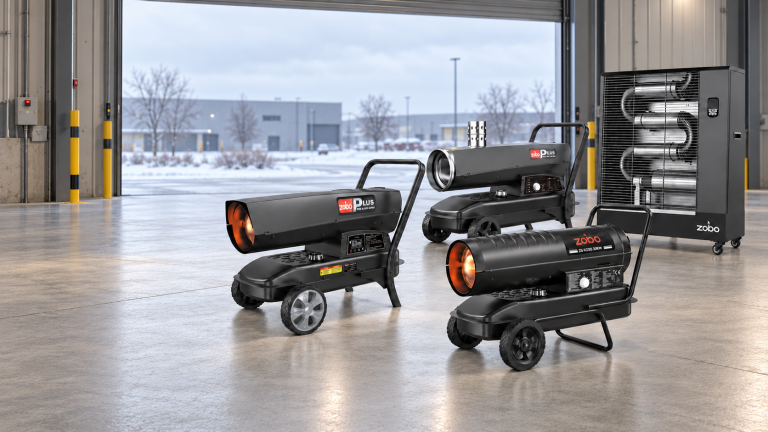
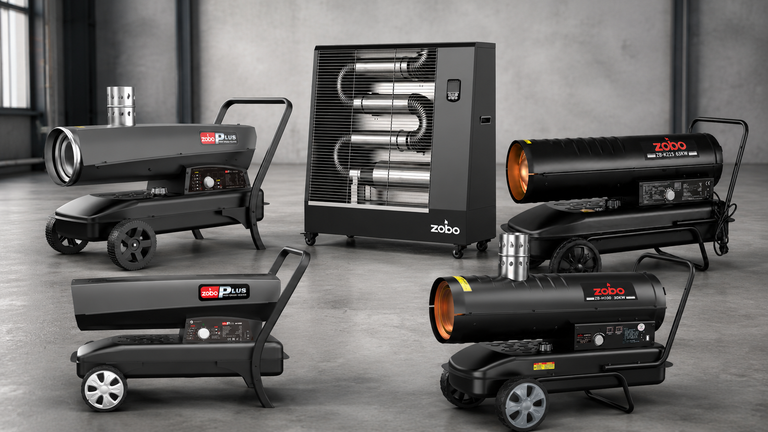
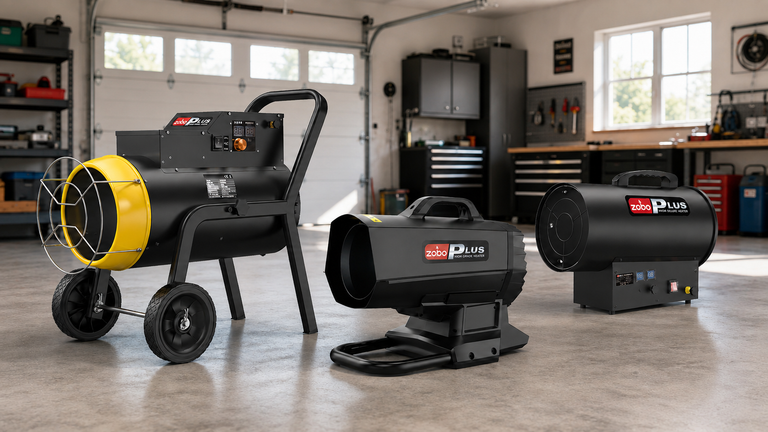
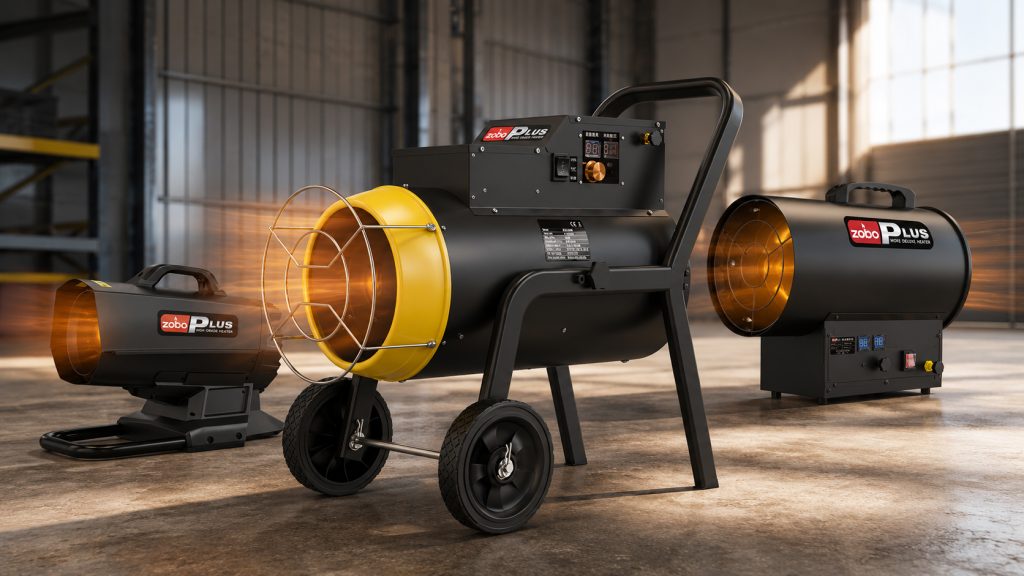
zobo propane gas forced-air heaters can provide workshop owners, warehouse managers, construction crews, garage owners, farmers, or anyone else with a large work area in need of fast, portable heat an attractive alternative to oversized electric heaters.
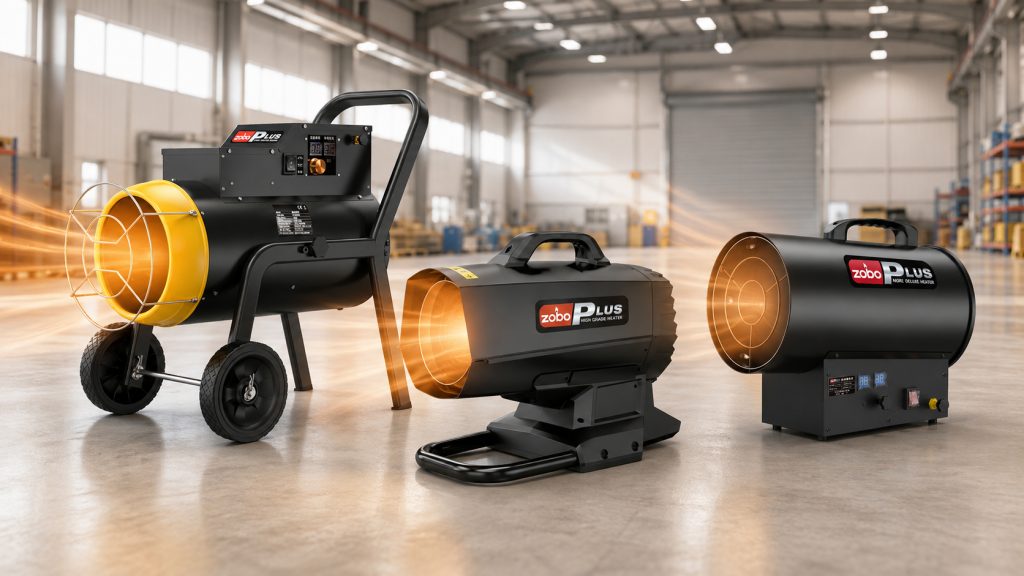
Recommended for commercial and industrial heating applications, zobo propane gas heaters are built to deliver warm air quickly while remaining easy to move to where they’re needed. Rather than being powered entirely by electricity, these heaters are capable of using propane/liquified petroleum gas as their main source of heat while using electrical power for the fan, ignition, and control functions.
Examples of areas that often need to be heated quickly include:
Workshops
Warehouses
Construction sites
Garages
Farm buildings
Crop greenhouses
Livestock facilities
Equipment maintenance areas
Events or gatherings in temporary structures
Outdoor working areas in winter
When heating very large areas, customers are often less concerned with simple questions like “Which fuel has the lowest price?” Instead, they want to know “How long will it take to raise this huge space up to a comfortable temperature?” A high-output propane heater can often heat up a work area much faster than electric heating can.electrical Supply Can Limit You More Than Propane Can.
Another important distinction between propane and electric heating is electricity supply. A small electric heater might be able to plug into a standard wall outlet. But what about a 50 kW industrial electric heater? Much larger electrical capacity would be required.
Specifically: 240V electrical service
380V or 400V electrical service
Three-phase power
Dedicated electrical circuits
Higher amp wiring
Larger circuit breakers
Professional electrical installation
…is typically required to produce that much heat from electric resistance heaters.
That type of electrical capacity might not be available at:
Construction sites
Farm buildings
Remote facilities
Temporary buildings
Outdoor work areas
New construction
When most of the heat comes from propane instead of electricity, installing a propane heater can be much easier. An electric heater requires that large amount of electricity just to produce heat. A propane heater needs much less electricity because the propane generates most of the heat. A propane heater simply uses electricity to run the fan, ignition system, controls, and other components. When Is Electric Heating Preferable? Of course, propane isn’t always the best option. Electric heaters have their advantages too.
Here are some examples where electric heat may be preferable:
Small Enclosed Spaces
If your primary need is to heat:
A small office
A single workstation
A small garage/shop
A compact storage closet
An insulated workshop with limited space requirements
A portable electric heater may be handier. There is little reason to install a large industrial propane heater when you only need one or two kW of heat. Short Heating Duration
Imagine you only need heat for one or two hours per day. Maybe you’re only using heat part-time or for a few months per year. At those levels, the fuel-cost savings from propane may not justify storing propane tanks on-site or installing a larger propane heater. An electric heater can simply be plugged in, turned on, and used as needed.
Electricity prices can vary widely by location, particularly for industrial customers: Average U.S. industrial electricity rates were 8.71 cents/kWh as of May 20 . That is less than half of the average residential electricity rate of 18.44 cents/kWh. When electric resistance heating has access to very cheap electricity, it can become quite competitive with propane heating. This is another reason why businesses should calculate costs based on their actual commercial or industrial electricity bill. Instead of searching online for “average electricity price,” use the price you actually pay on your monthly electricity bill. Places Where Open Flame Is Restricted
Portable electric heaters don’t produce combustion gases on-site.
Propane Heating vs Electric Heating:
Attribute Propane Heater Electric Heater
Fuel Propane or LPG Electricity
Heat output Ranges from low to extremely high. Limited only by propane heater size. Heating output ranges from low to very high. Depends on size of heater and electrical infrastructure. Heats up space Very quickly. Powerful propane heaters can produce 30 kW of heat or more. Fast. Can be upgraded to produce 50 kW, 100 kW or more if necessary. Fuel cost Often competitive, but depends on your propane price and electric rate. Varies greatly by location and customer. Depends strongly on local electricity price. Portability High. Most small-to-medium propane heaters are portable. Electric heaters are also often portable.
Smaller models can usually be moved easily. Larger electric heaters become difficult to move. Electrical requirements Relatively low. Some electricity required for controls and fan. Required in amounts that increase significantly with heater size. Fuel storage Required. You need to keep a supply of propane bottles or tanks on hand. Not required. Produces combustion gases onsite? Yes. No – but electrical heating produces lots of CO₂ where the electricity is generated. Ventilation Requirements? Yes, if using direct-fired propane heaters. No ventilation needed for combustion purposes. Suitable for large industrial buildings? Yes. Easily provides 30 kW or more of heat in a emergency, temporary or permanent capacity. Depends on electrical service for electric heaters. Suitable for construction sites? Yes. Can use off-the-shelf or custom-made propane heaters. Depends on power availability for electric heaters. Suitable for small rooms? Depends. Many heaters are not recommended or practical for use in small rooms. Typically recommended. More convenient and practical than installing a propane heater in many small rooms.
Propane vs Electric Heating for Workshops
With propane heaters, it’s important to determine your heating load. For example, a small workshop that is well insulated may require as little as 5-10kW of heat to keep it comfortable. Electric heaters can easily handle that heat load. But a large, drafty workshop may need 30 kW, 50 kW, or more. Once you start reaching that level of heat demand, the required electrical wiring and circuit breakers become much more important. Without sufficient electrical capacity, a propane forced-air heater may be able to deliver that heat without heavy electric wiring.
Propane vs Electric Heating for Construction Sites
Portable propane heaters are a very common choice for construction sites.
Buildings under construction often have:
Incomplete or no insulation
Open doors and windows
Large air leakage due to openings
No permanent heat source installed yet
Limited or no electrical service available
During construction, heat loss can be very high. High-heat-output propane forced-air heaters offer a simple way to provide temporary heat without requiring permanent high-capacity electrical heaters. Remember to store propane cylinders safely, maintain clearance from combustibles, and provide adequate ventilation per the manufacturer’s instructions and local regulations.
Propane vs Electric Heating for Farms / Agricultural Buildings
Agricultural buildings can present a similar challenge:
Large heated area
Doors frequently opened
Ceilings are often very high
Building may be insulated, but often has little or no insulation during cold seasons. Temperatures may be quite cold during winter months. Can require large amounts of heat. Propane heaters can offer high heat output without requiring massive amounts of electrical power.
Of course, proper ventilation and consideration for animals, crops, and personnel must be taken into account with direct-vented propane heaters. Electric heaters may be more suitable for smaller, enclosed areas where lower heater output is sufficient. What About Heat Pumps? Don’t forget about heat pumps. A heat pump isn’t the same as an electric resistance heater. Heat pumps don’t generate heat directly. They move heat from one place to another. By moving heat rather than generating it, heat pumps can deliver 2, 3, or more units of heat for every unit of electricity they consume.
The US Department of Energy says heat pumps can reduce heating electricity use by up to 75% compared to electric resistance heaters, depending on your system and climate. Heat pumps work well for you if you already have one. However, this article is comparing propane fuel costs against electric heating costs.
The comparisons above are mostly for:
Electric fan heaters
Electric furnaces
Electric resistance heaters
Electric space heaters
Electric air heaters used for industrial applications
If you need to compare propane against a heat pump you own or are considering purchasing, use your heat pump’s actual COP (Coefficient of Performance) or seasonal efficiency. Is Propane Heat Cheaper Than Electric? Final Thoughts
For many commercial and industrial customers, the answer is “yes.” Propane heating can be cheaper than traditional electric resistance heating. Based on recent average U.S. residential prices, propane was about 40% cheaper than electric heat in our example. ($0.111 per useful kWh of propane heat vs $0.184 per kWh of electric heat.)
However, this is not always the case. If you have extremely low electric rates, buy propane at high prices, need very little heat, or only use heaters occasionally, electric heating may be cheaper. When do you think propane heating would be more advantageous?
Propane/ LPG heating may make more sense when: You need a large amount of heat
You need to heat a large space very quickly
Electricity costs more where you live
You have limited or no electrical service available
The heater needs to be portable
You need temporary heating while installing a permanent system
You’re heating a workshop, farm building, warehouse, construction site, or similar area. When considering propane vs electric heating, consider total cost of ownership.
Look at factors like: Heater purchase price
Fuel costs
Electrical infrastructure
Building size and insulation levels
Heating duration
Maintenance requirements
Ventilation requirements
A limitation that zobo LPG /propane gas heaters can solve.
Since zobo propane heaters do not need to rely exclusively on electricity to produce heat, they can produce high heat outputs without requiring the same level of electrical infrastructure as a large electric heater.
Instead of needing a large electrical supply to produce high amounts of heat, propane heaters use electricity for the fan and controls while burning propane for heat. Think of it as using electricity to push the heat around instead of creating it.
Having access to both propane and electricity allows contractors, distributors, farmers, and industrial buyers to deploy propane heaters in a wider range of temporary work environments.
It also means that when the heater is in use, it doesn’t draw as much electricity from the grid. Propane becomes the primary heating fuel instead of electric resistance.
When Should You Consider a ZOBO Propane Heater?
If propane has a lower unit cost than electricity in your area, that does not always mean you should choose propane gas heaters.
When comparing propane and electric heating, the right solution always depends on the application.
When should you consider a propane gas heater? Here are a few applications where a zobo propane gas forced-air heater may be a good choice:
The space is large or outdoors and needs to heat up rapidly
Electric heaters do not offer sufficient heating power
There is limited or no electrical capacity
The heater will be moved around during use
Heating is only needed on a temporary or seasonal basis
The space is a workshop, warehouse, farm building, garage, construction site or other large area
Propane gas is available at your location
Smaller, enclosed spaces will often have enough electrical service for electric heating to be simpler. For larger workshops, warehouses, farms, outdoor spaces, construction sites and other commercial or industrial areas without carpeting or extensive insulation, propane heaters offer a compromise between heating speed, total heat output, portability, and ease of fuel.
zobo provides commercial and industrial propane gas heaters for customers who need to heat workshops, warehouses, indoor and outdoor work areas, and more. Choose a zobo propane heater based on your space size, desired heating output, ventilation needs, fuel availability, and specific operating environment.
Is propane heat cheaper than electric? When it comes to heating large spaces, yes.
Much of the time propane will have a lower hourly operating cost than electric resistance heating. If you live in an area with high electricity prices and need to produce high levels of heat, propane/ LPG can offer significant cost savings.
Choosing a heating system should not be based on cost alone. Some scenarios are simply better served with electric heat, especially when electric heaters can be used on a part-time basis.
Others, however, can benefit from the heating speed of propane gas heaters, high total heat output, and ability to heat large spaces without relying on high-amperage electrical outlets. When looking at workspace heating for large commercial or industrial spaces, consider zobo propane gas heaters as a potential solution.
Before making a decision between propane heaters and electric heating, be sure to consider:
Local price of LPG or propane
Electricity cost
How much heating capacity is needed?
How big is the building and how well is it insulated?
How much electrical power is available?
How many hours per day will the heater be running?
Does the area require ventilation?