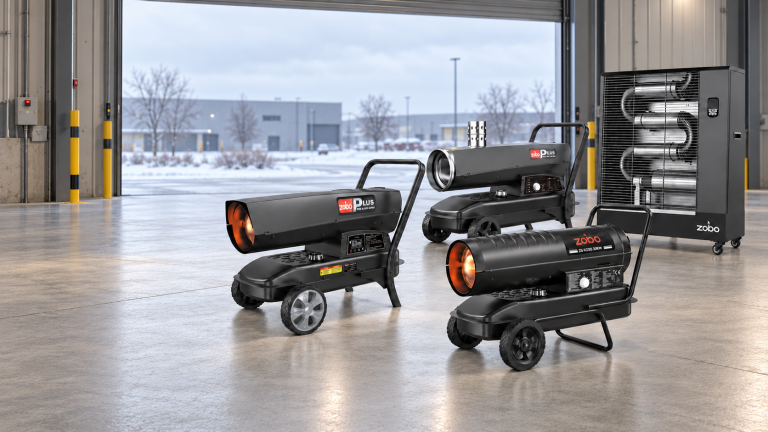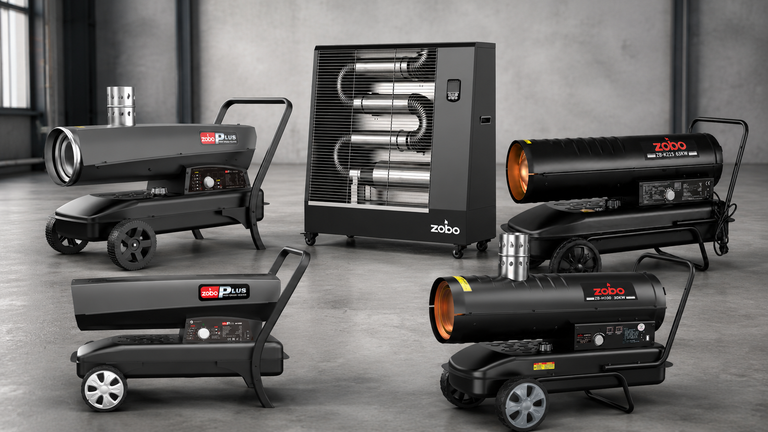

Choosing a reliable diesel heater manufacturer supplier in China.
Unless you plan to negotiate locally, choosing the right diesel heater factory isn’t as simple as requesting product prices from different suppliers.
Many diesel heater importers, distributors, wholesalers, equipment brands, agriculture suppliers, and industrial heating companies ask us: how do we know if this supplier will be able to produce safe, quality products consistently? Will they support customized requirements? Will they supply the right certifications? Can they guarantee on-time delivery for large orders?
If you only focus on getting the lowest quotation in the beginning, challenges with unstable ignition, inconsistent components, delayed production times, spare parts shortages, certification errors, or weak after-sales support can dramatically increase your total cost of purchasing diesel heaters.
That’s why sourcing diesel heaters requires professional buyers to vet a heater factory from multiple angles before placing a bulk order.
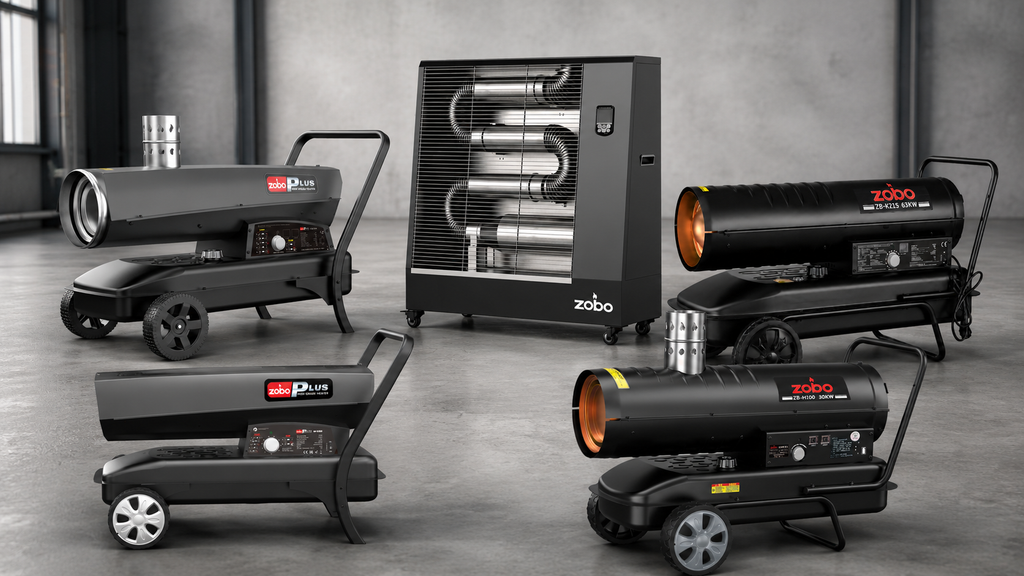
In this diesel heater manufacturer checklist, we cover the most critical questions to ask when comparing diesel heater factories. We share what you should verify about: factory credentials, manufacturing capabilities, product ranges and options, quality control and testing, certifications, OEM/ODM services, bulk ordering and MOQ requirements, spare parts and after-sales support.
- Factory Verification: Are You a Manufacturer or Trading Company?
One of the easiest ways to verify a supplier’s credibility is to know whether you are talking to the actual manufacturer or a trading company.
Please note: trading companies can be a good option if you want to source diesel heaters from a factory that also offers sourcing and export services. But if you are looking to place larger orders, develop your own brand, customize product specs, or establish a long-term relationship… dealing directly with a reputable manufacturer will often provide you with greater control.
You should expect an honest manufacturer to be transparent about where and how the diesel heaters are made. Ask to see:
Check the Factory Facilities
Ask the supplier to provide recent photos or videos of:
✅Factory buildings
✅Production workshops
✅Assembly areas
✅Raw material storage areas
✅Finished-product warehouses
✅Testing areas
✅Packaging lines
✅Loading bays
For larger orders or more serious projects, consider requesting a factory visit or video factory inspection.
Real manufacturing capability is not about how large a factory building looks. Observe whether the facility looks organized. Are different production steps clearly defined and managed?
Expect a reliable industrial diesel heater manufacturer to have enough space and equipment not just for assembly, but also for product testing, inventory storage, packing, and bulk order preparation.
Check the Production Line
Does the factory have the right equipment for production? Can they clearly explain the basic flow of manufacturing?
Sample process:
Raw materials → component inspection → assembly → electrical connection → combustion-system installation → ignition testing → safety testing → final inspection → packaging → warehousing
Every heater design will have slightly different production steps. But does the factory have repeatable production and inspection processes?
Professional B2B buyers know that stable production is more important than a single perfect sample. A diesel heater factory can spend weeks preparing and troubleshooting a single sample unit by hand.
Will hundreds or even thousands of these units be produced during your bulk order? The most important question you need to ask is:
Can your supplier ensure similar quality from the 1st unit to the last unit produced?
- Evaluate Manufacturer’s R&D Capability
Industrial heaters are more complicated than simple metal housing with a motor, fuel tank, burner, and knobs.
Airflow, combustion stability, temperature settings, heating capacity, flame detection, ignition systems, PCB control boards, programmable configurations, fuel nozzle/delivery systems, overheating protection, structural design… these can all play a factor in how well a diesel heater performs on the field.
Engineers and R&D capabilities are therefore critical when choosing a diesel heater supplier.
Ask if the supplier has engineers or technicians responsible for product development in these areas:
✅Product development
✅Electrical systems
✅Combustion system
✅Structural design
✅Control system
✅Product testing
✅Product improvement
Note: R&D competence is also critical for OEM or ODM requests
A supplier that only pre-assembles stock products will likely have a harder time meeting these requirements. But if the manufacturer offers their own in-house engineers, they should be able to communicate more clearly about project feasibility when customizations or market-specific configurations are involved.
- Check Manufacturer’s Product Range
Seasoned heating suppliers know that different applications often require different heating solutions.
A warehouse may require the exact same heating capacity as a greenhouse. But the physical space, user requirements, installation environment, and HVAC considerations can vary significantly between these two application types.
Before rushing to select a diesel heater supplier, consider whether they offer:
Multiple heater types
Not every application requires a forced-air diesel heater. Sometimes direct-fired or indirect heating options are more suitable. Confirm that manufacturers can offer more than 1 or 2 models before assuming they have your exact required specification.
Multiple Power Ranges
Industrial diesel heaters can range from approximately 8 kW to 75 kW+. Larger units may be suitable for livestock barns and hangar heating. Smaller wattages may better fit workshops or agricultural cold storage.
Check these examples:
Forced Air Diesel Heater
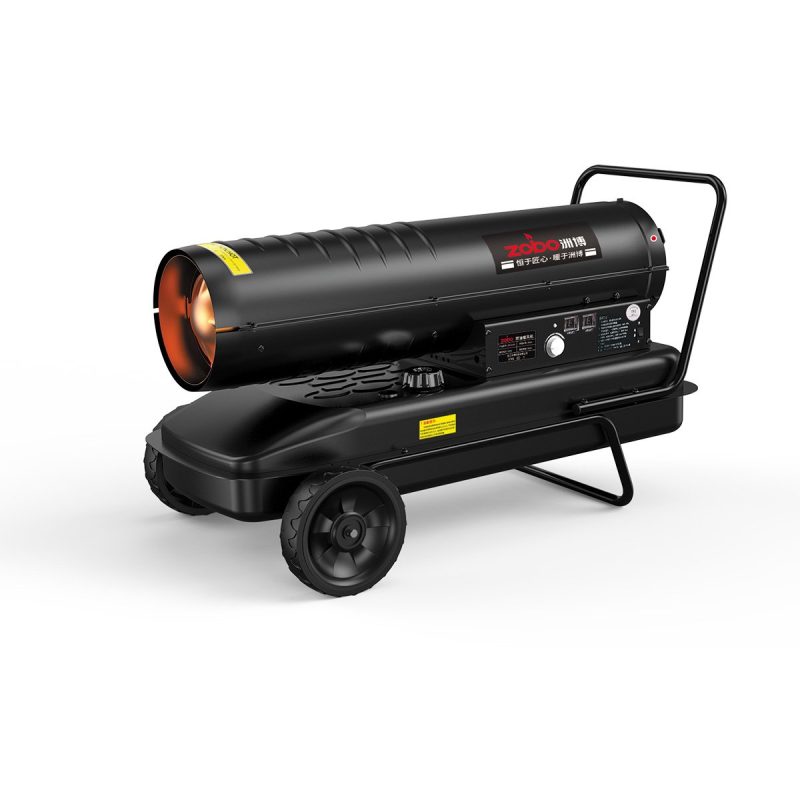
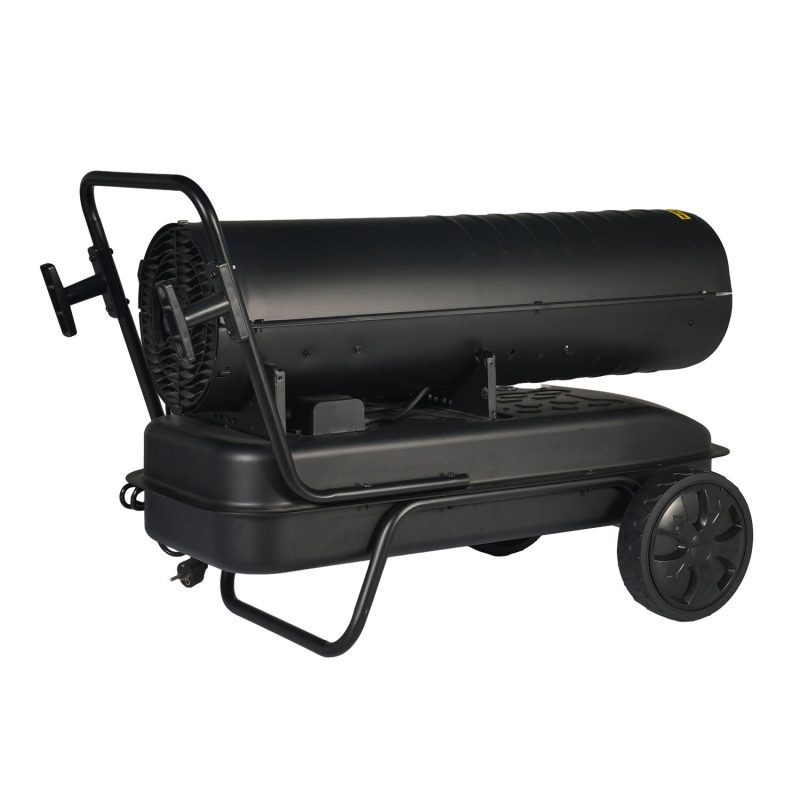
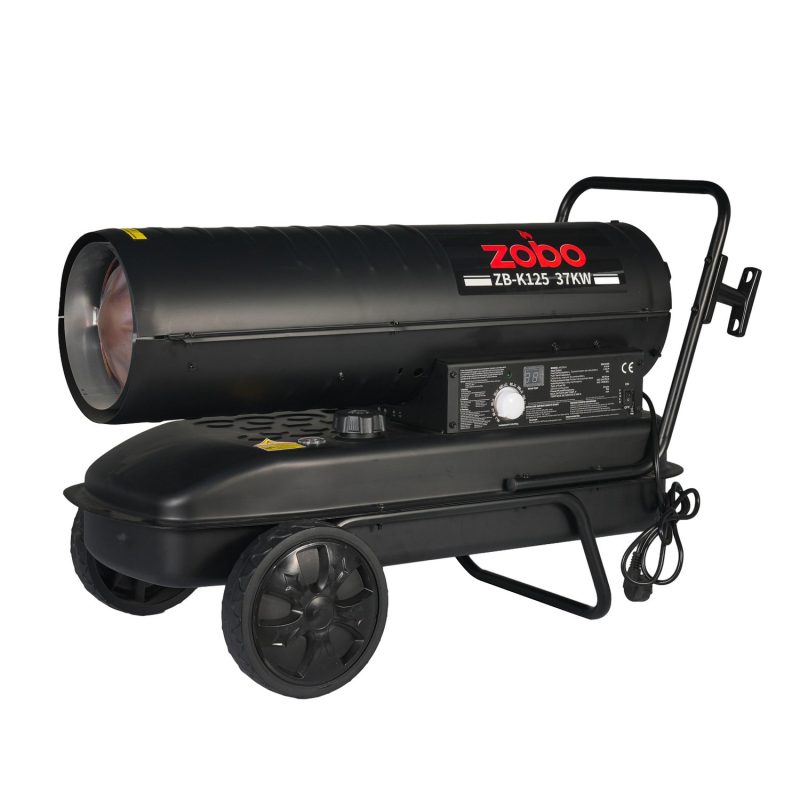
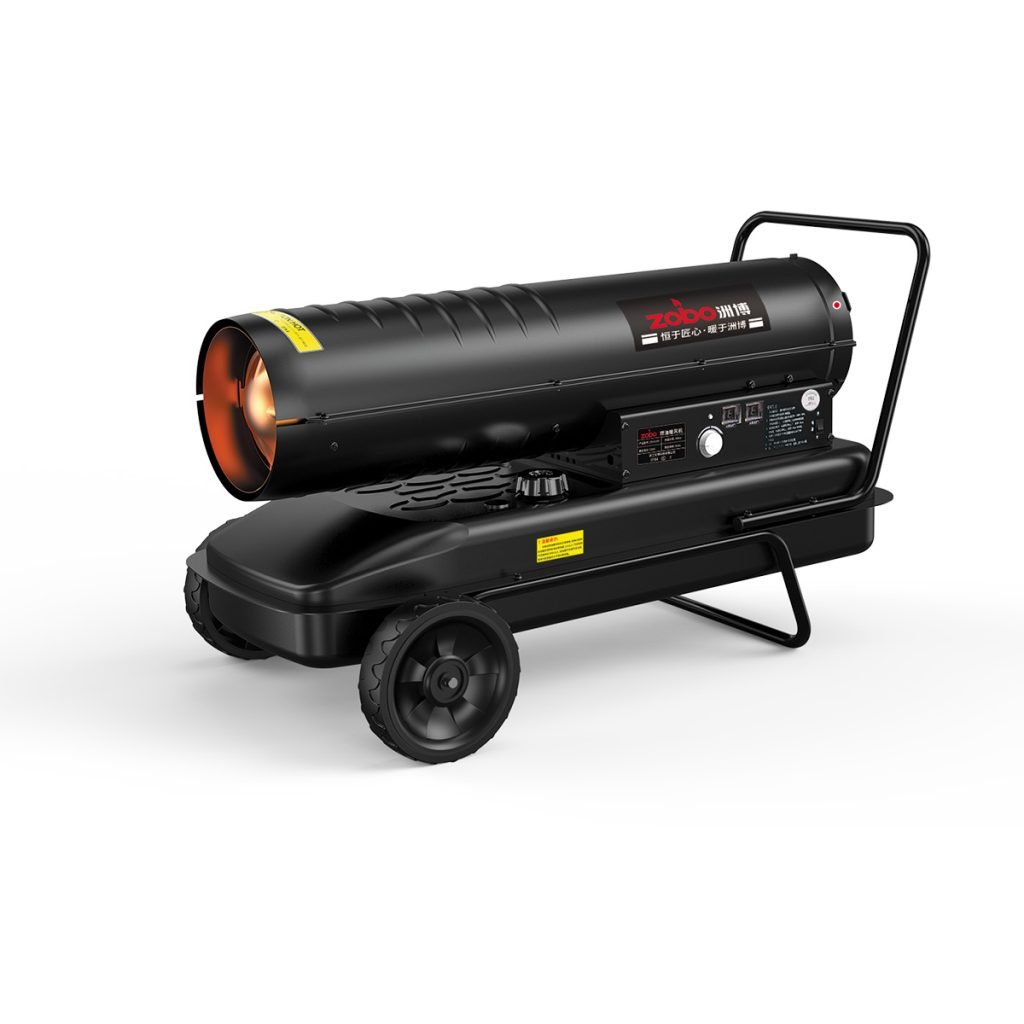
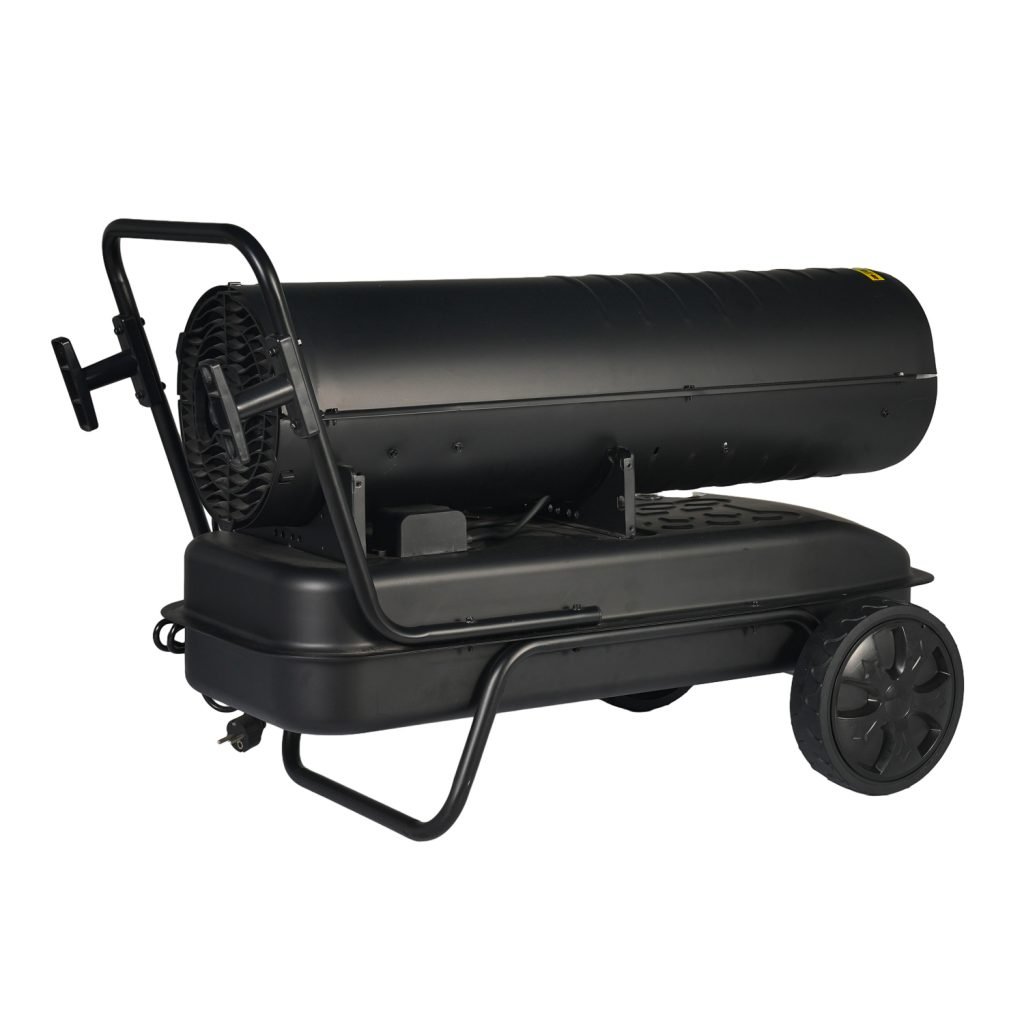
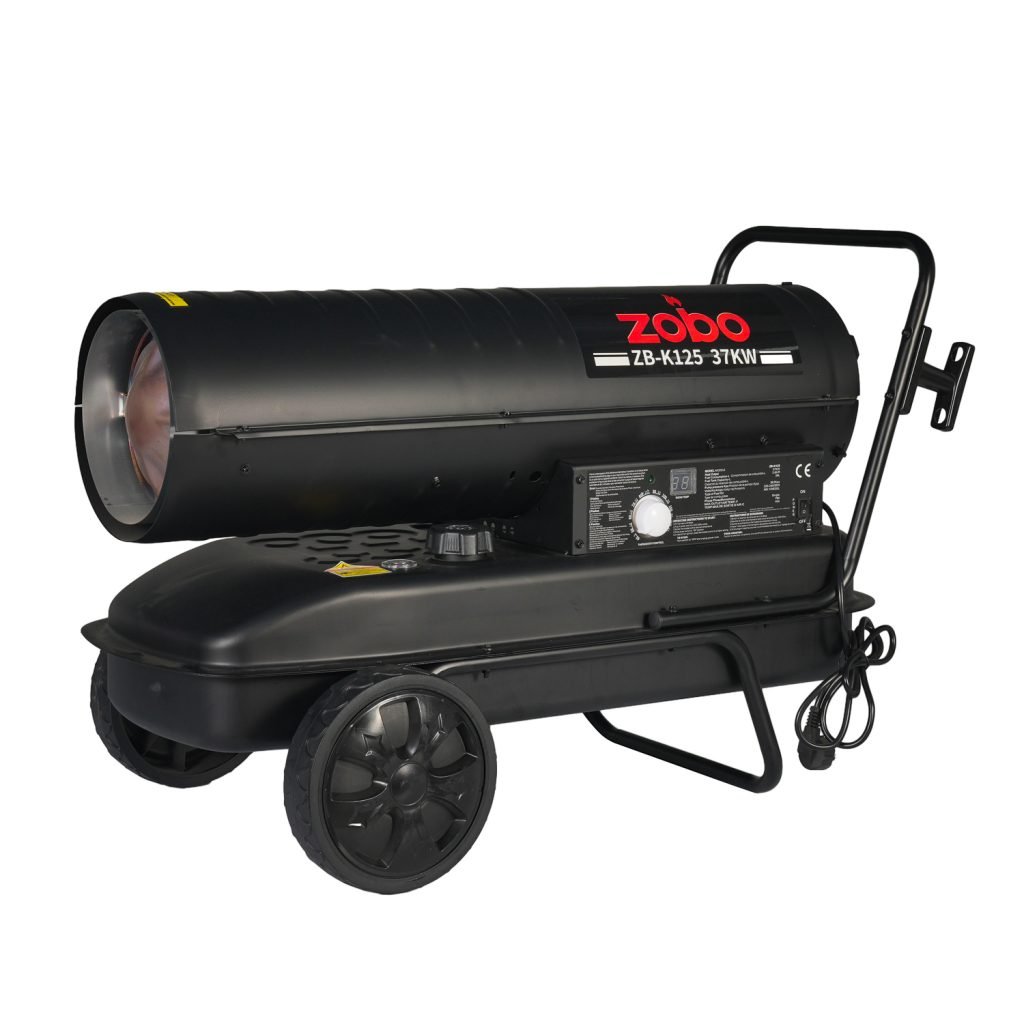
ZB-K175
Circular barrel design, fashionable and beautiful Electronic flame control with photocell, overheat protection for safer use
Imported stainless steel for high-temperature resistance and extended service life
Large-capacity fuel tank for long working hours
Digital display screen for flexible temperature setting
Certified for Global Markets – CE & ETL Approved
Our products are fully certified with CE (EU) and ETL (North America), ensuring compliance with strict international safety, quality, and performance standards. This allows smooth market access in Europe and the United States.
Fuel-powered heaters with a fan used to blow heated air into the surrounding space.
Common applications include:
- Workshops
- Warehouses
- Construction sites
- Farm equipment enclosures
- Covered buildings
- Commercial garages
- Greenhouses
- Large industrial buildings
Compare heating capacity, airflow, rated fuel consumption, tank volumes, thermostat functions, safety features, longevity, and available power ranges between suppliers.
Direct-Fired Diesel Heater
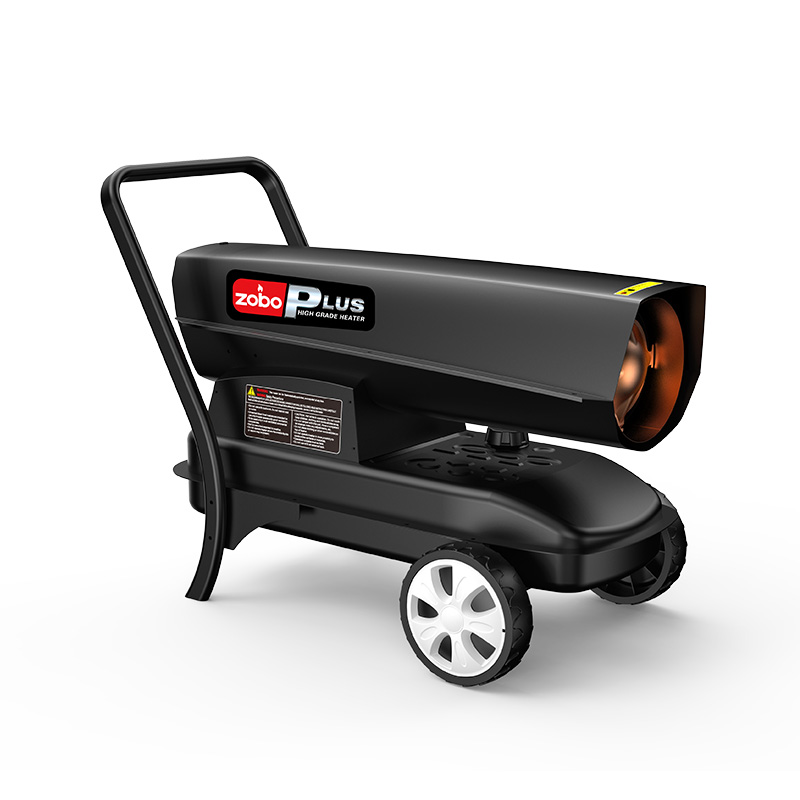
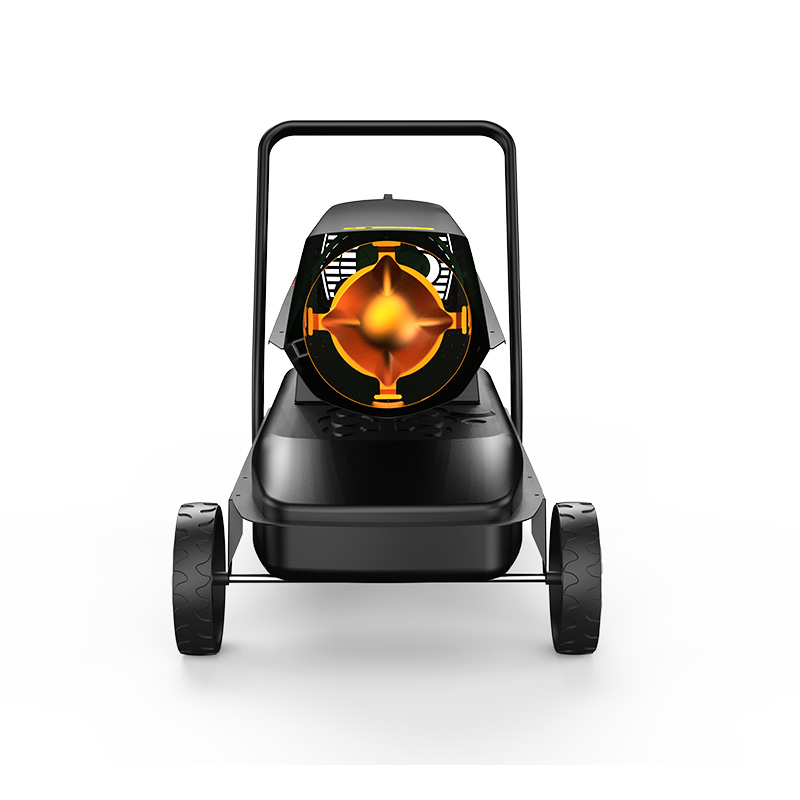
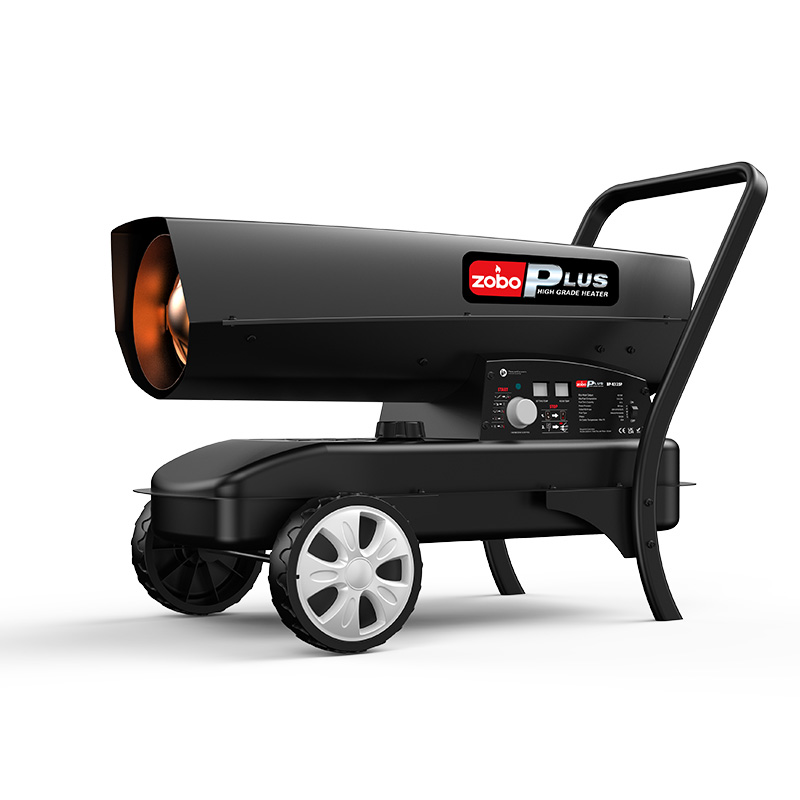
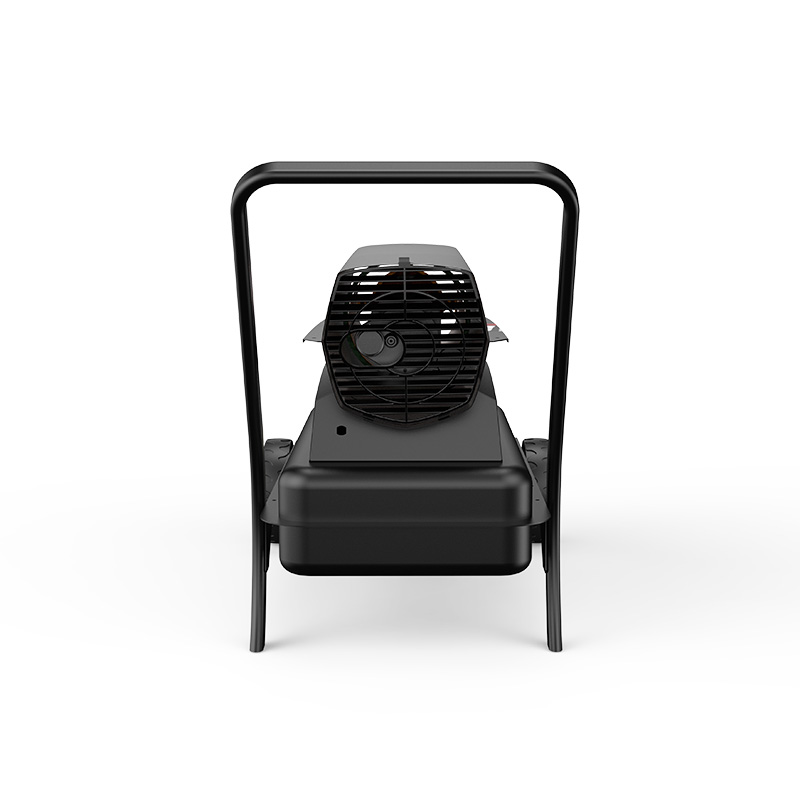
PLUS K180
High output delivers strong and reliable heat for large spaces like greenhouses, workshops, warehouses, and agricultural buildings.
Patented curved design with reinforced square tube frame for enhanced stability and durability
Dual digital display shows ambient and set temperature clearly for precise control
Adjustable temperature settings help improve energy efficiency and reduce fuel consumption
Intelligent constant temperature control ensures stable and reliable heating performance
Large-capacity fuel tank supports long continuous operation with fewer refills
Industrial heaters that release heated combustion air directly into the space being heated.
Highly efficient direct heating results in a faster temperature rise. Ensure your facility is properly ventilated or equipped with exhaust ports if you intend to use direct-fired heating.
Indirect Diesel Heater
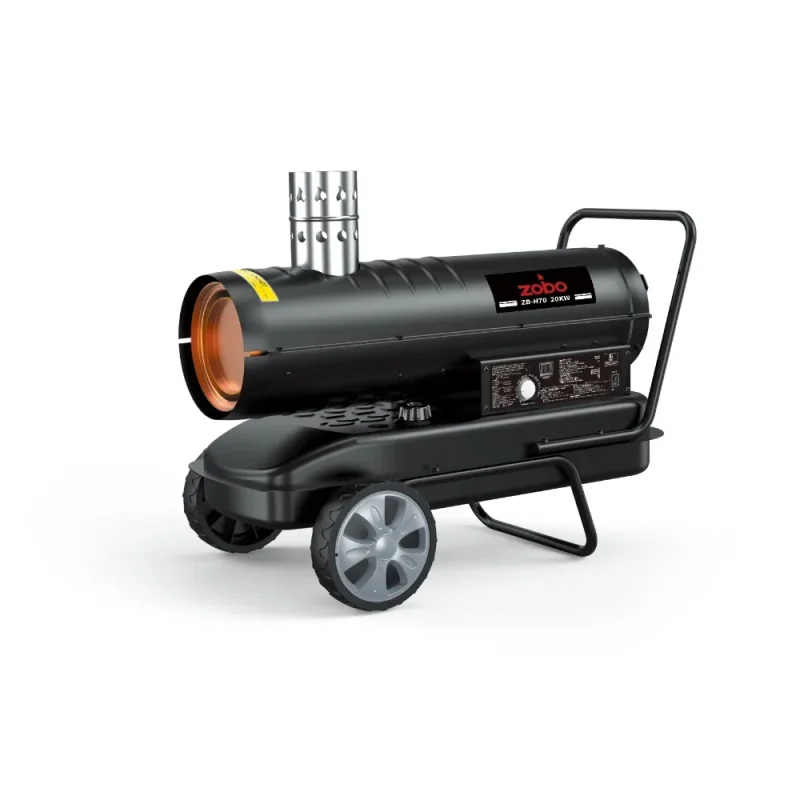
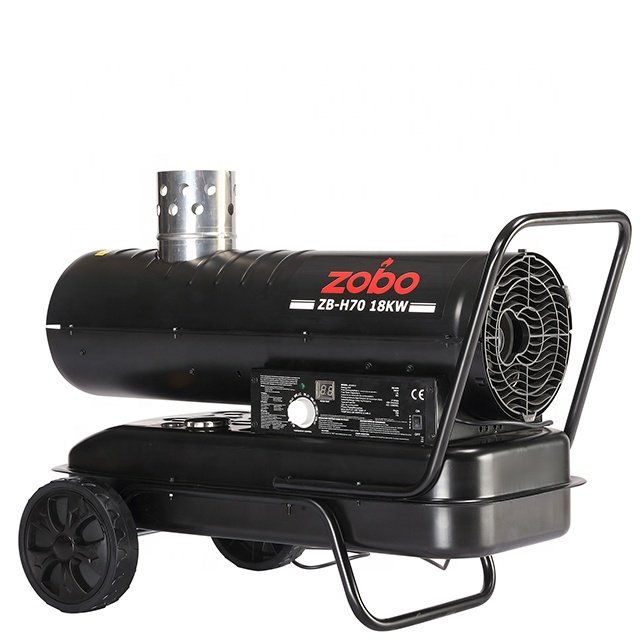
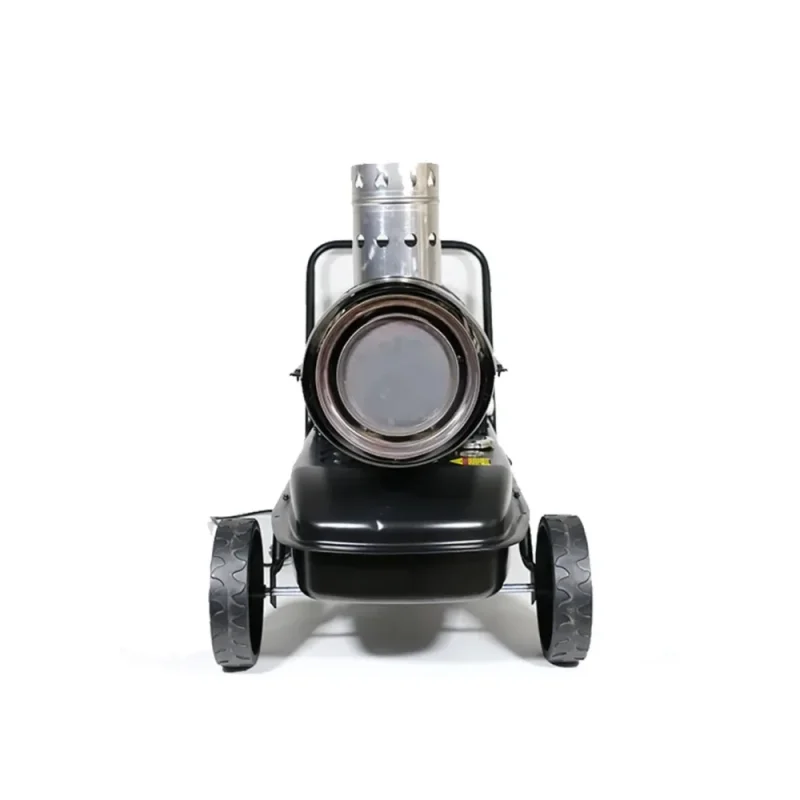
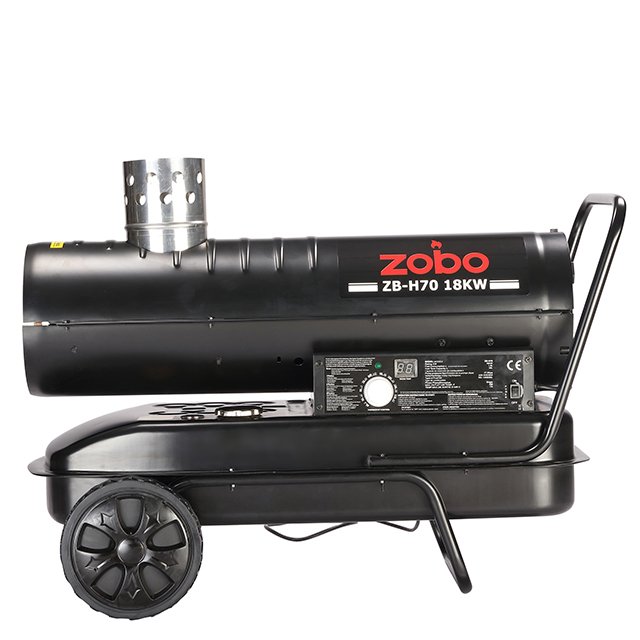

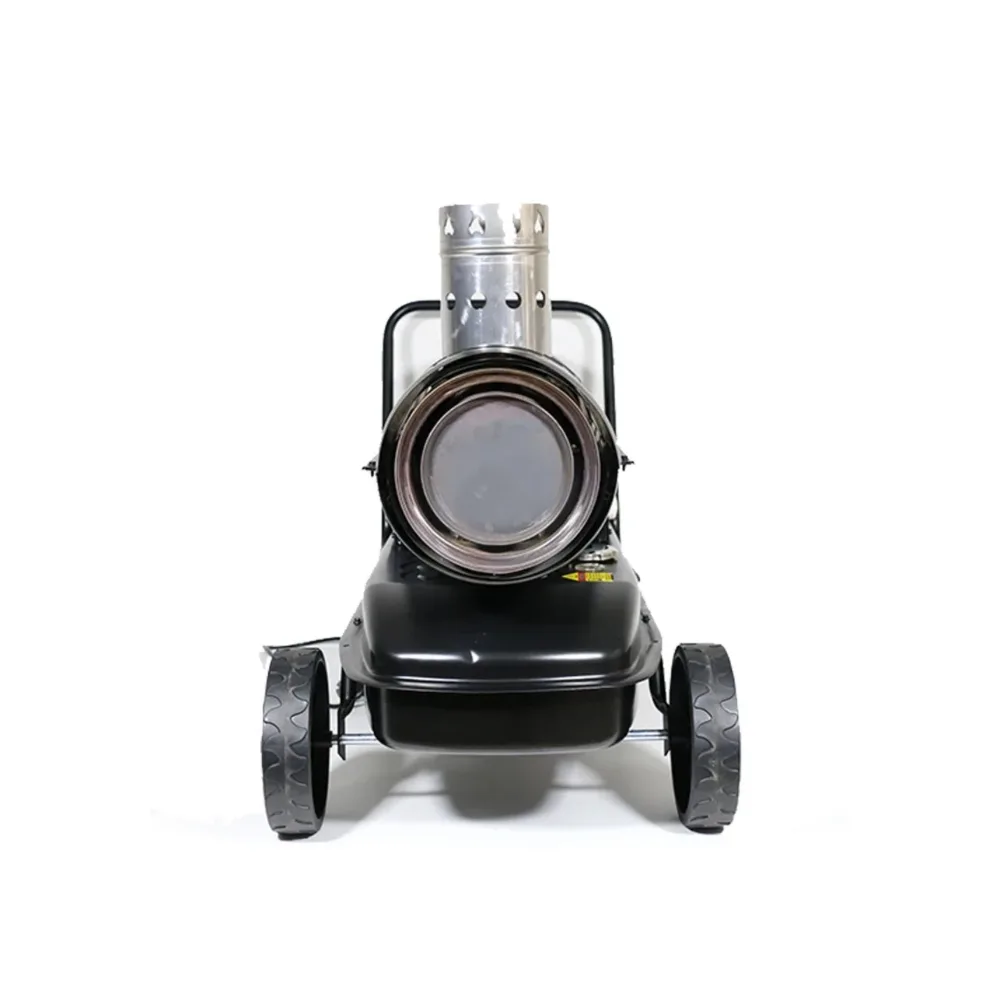
ZB-H70
Clean & Odor-Free Heating System
Fully separated heating airflow and combustion exhaust ensure clean, odor-free warm air output for a safe and comfortable environment.
Dual Digital Display with Precise Thermostat Control
Dual-display digital screen enables real-time monitoring and constant temperature control for stable, efficient heating.
Instant Heating & Wide Coverage
Rapid temperature rise provides immediate warmth with broad and even heating coverage.
Duct-Connectable Hot Air Output
Supports duct connection for directed hot air induction heating,
designed for a wide range of environments, suitable for farms, industrial, warehouses, garages, shops, greenhouse, and outdoor use.
CE Certified – Compliant with EU safety and environmental standards, Ready for EU Markets
Using waste-heat/exhaust separation technology this heater produces clean, pollution-free hot air; these indirect fired diesel heaters are normally implemented when a cleaner combustion air source is needed.
Infrared Diesel Heater
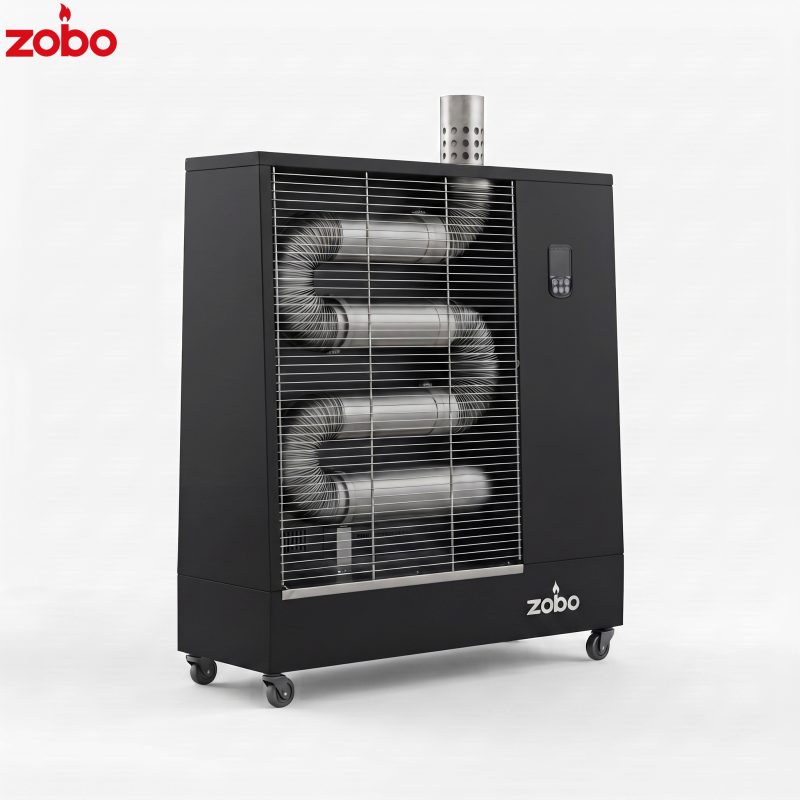
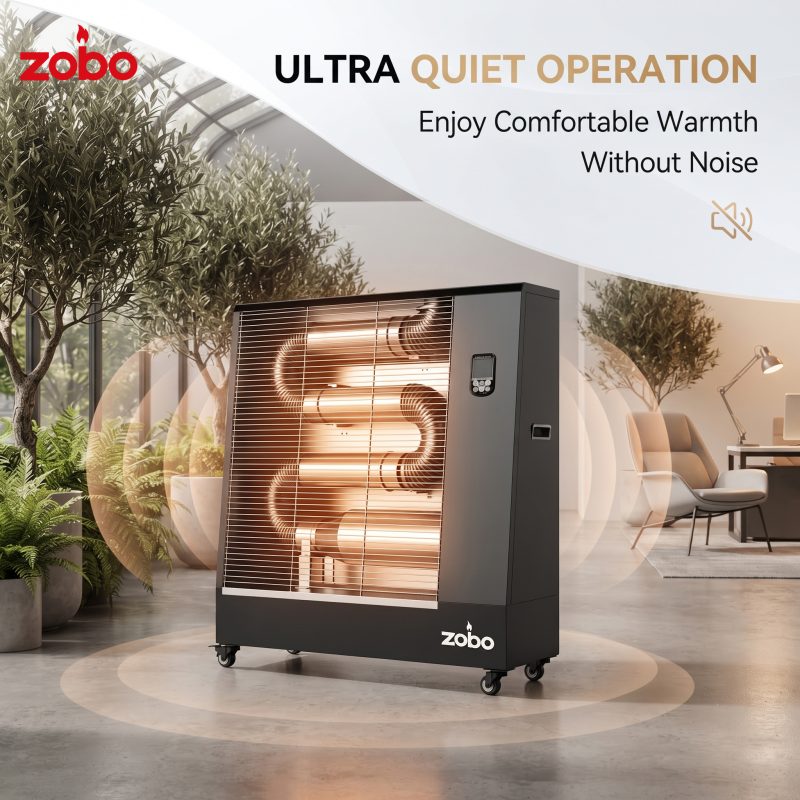
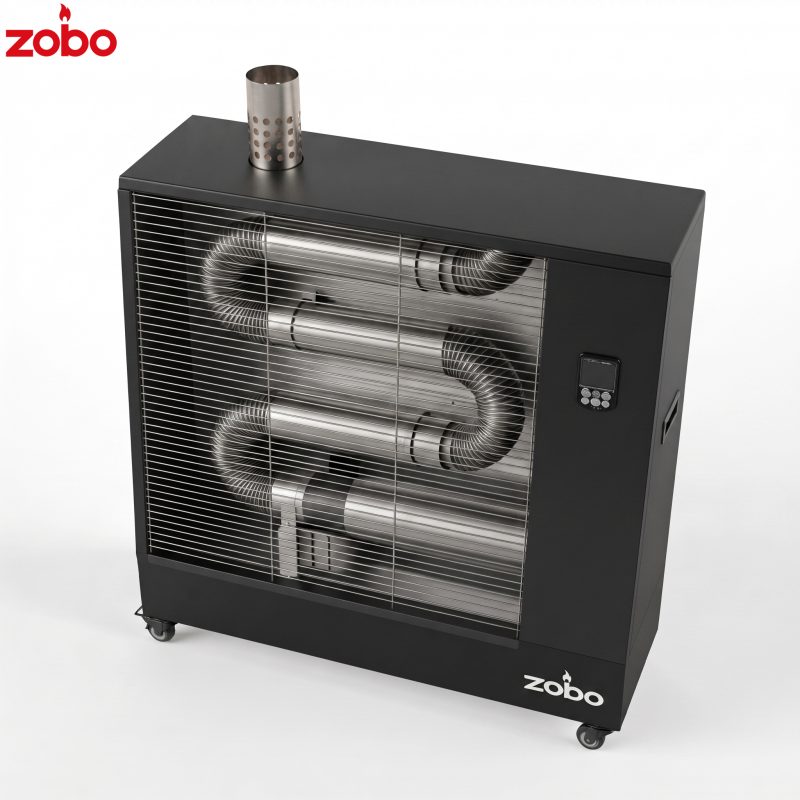
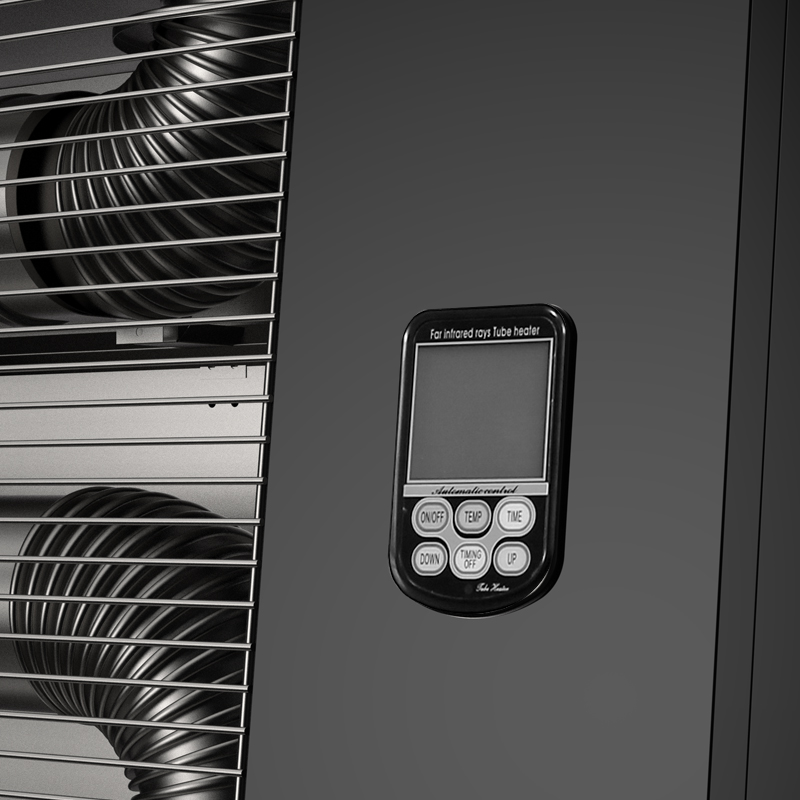
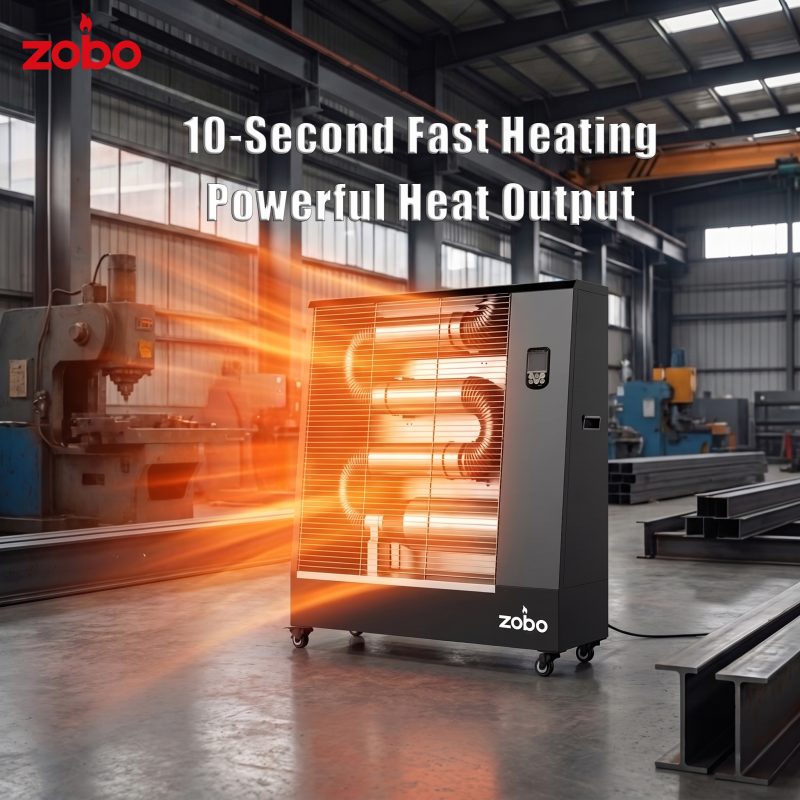
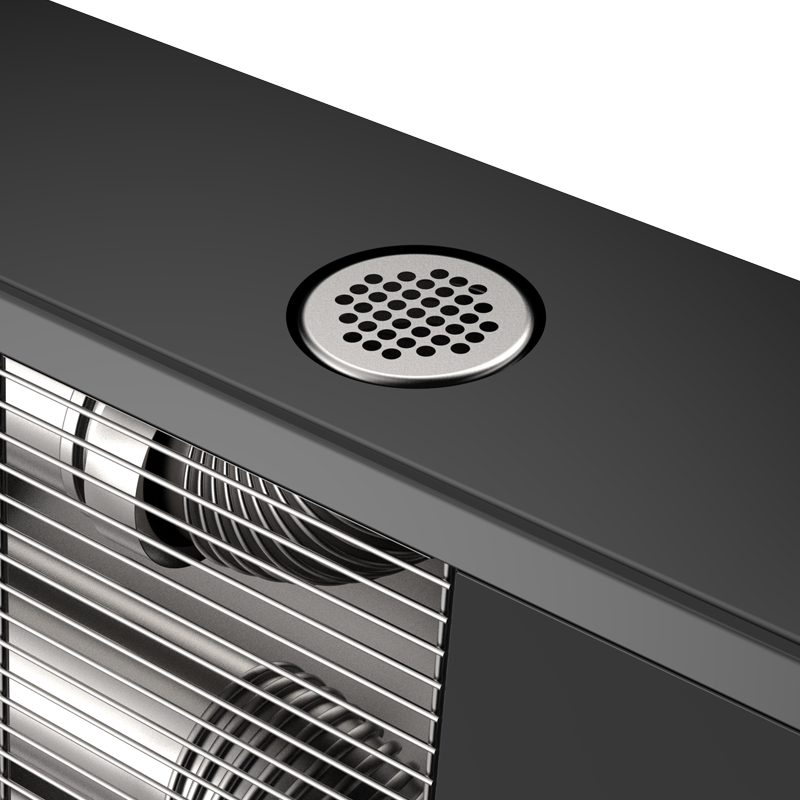
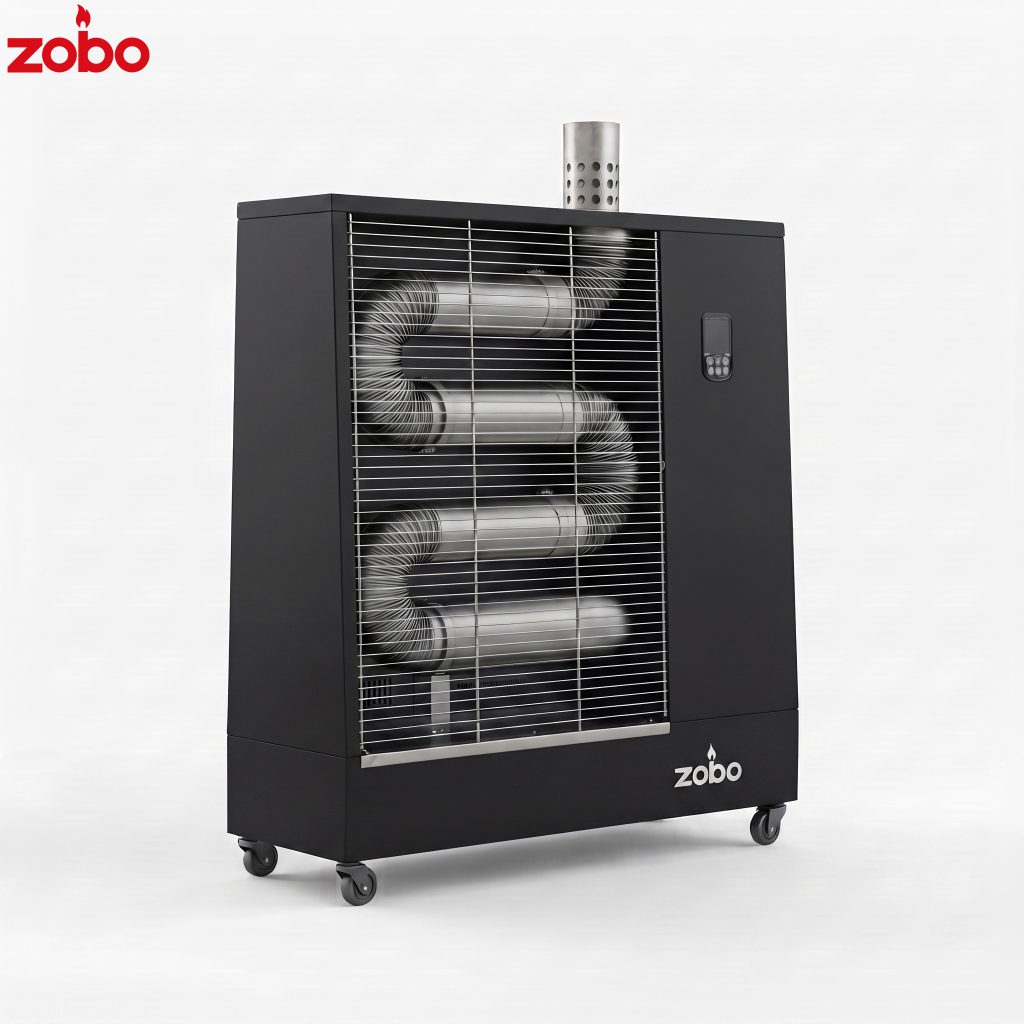
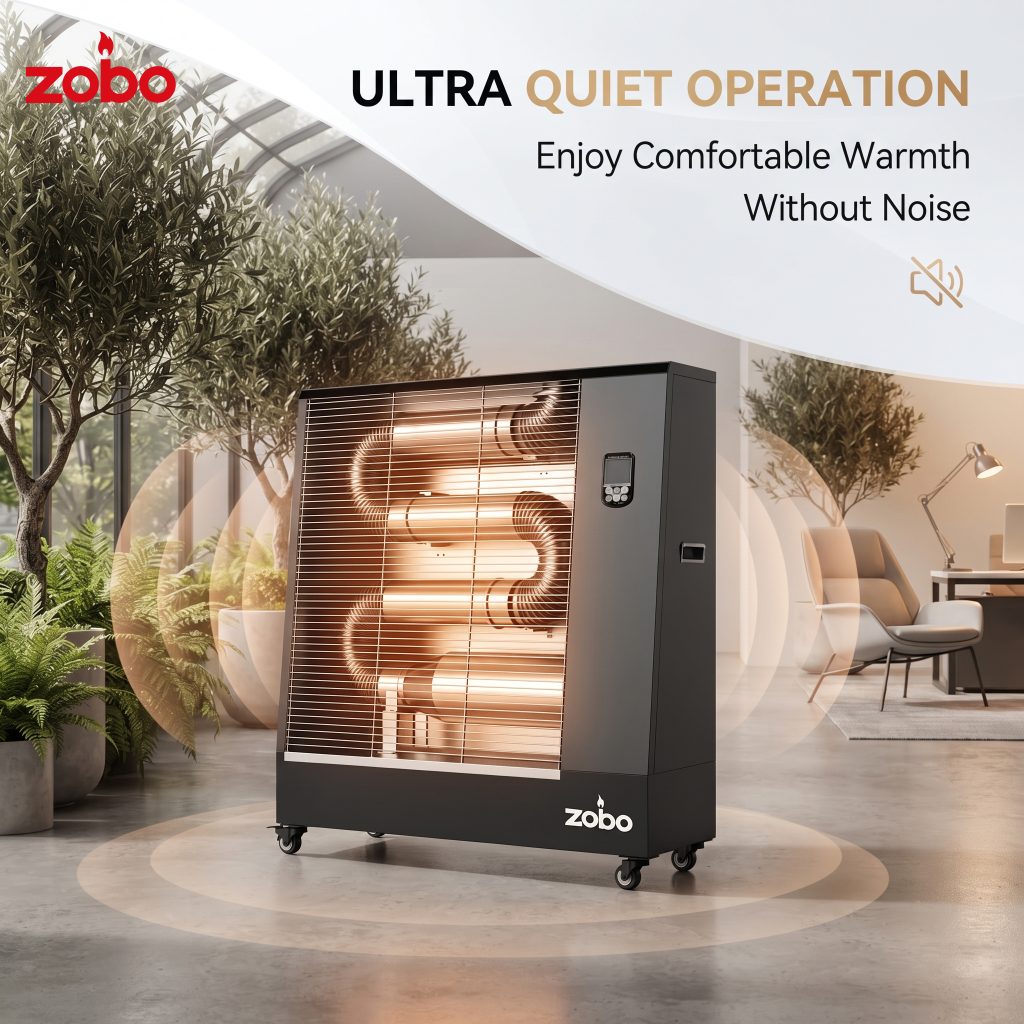
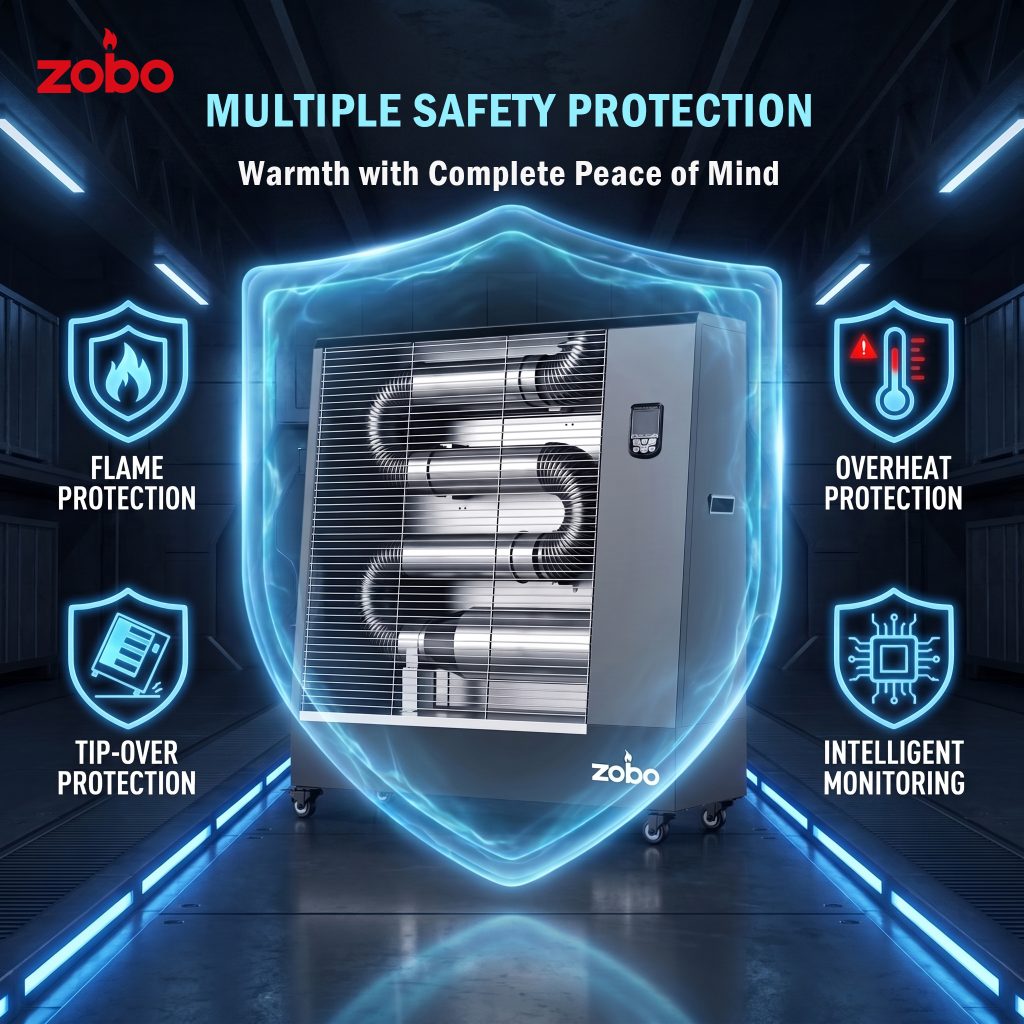
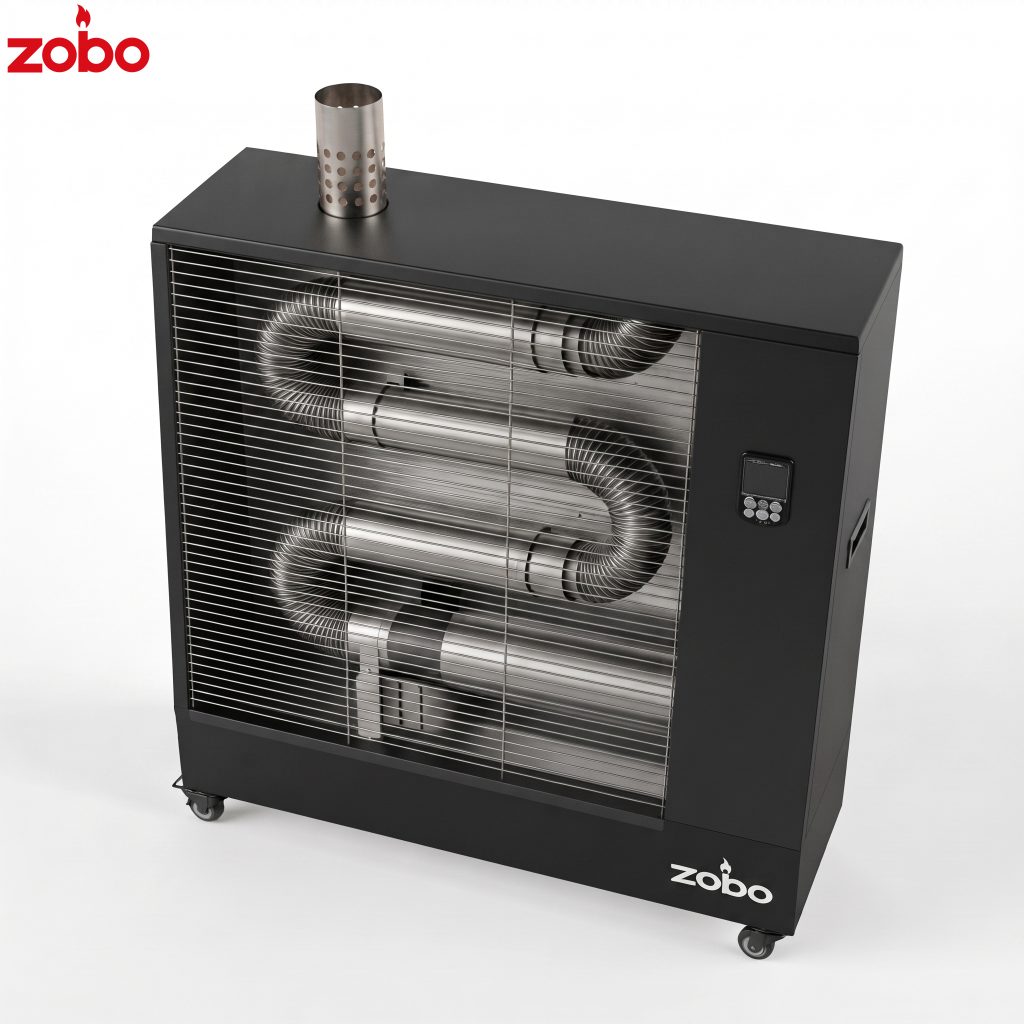
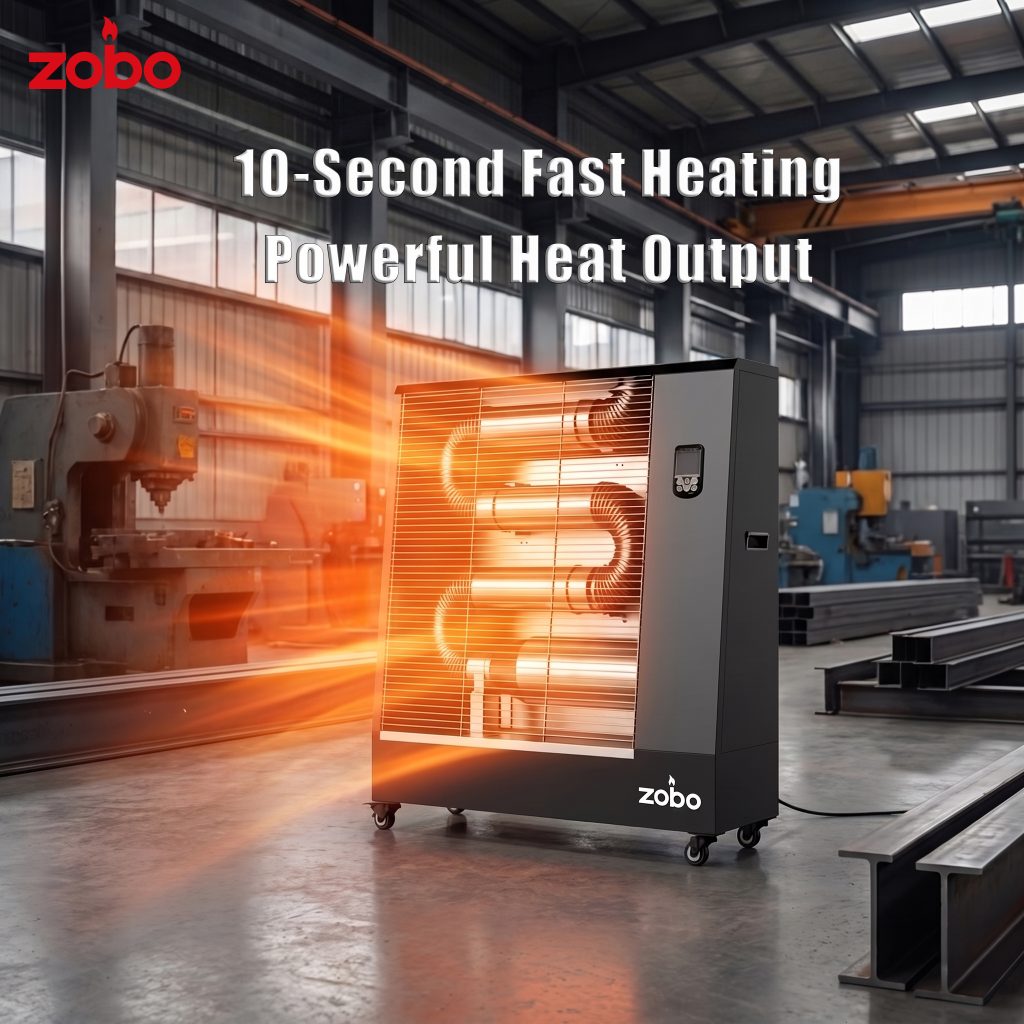
ZB-KF11
13kw Infrared Diesel Heater
13kW / 32L / 1.03L/h / 260m³
10-second rapid heating upon startup, delivering powerful thermal energy
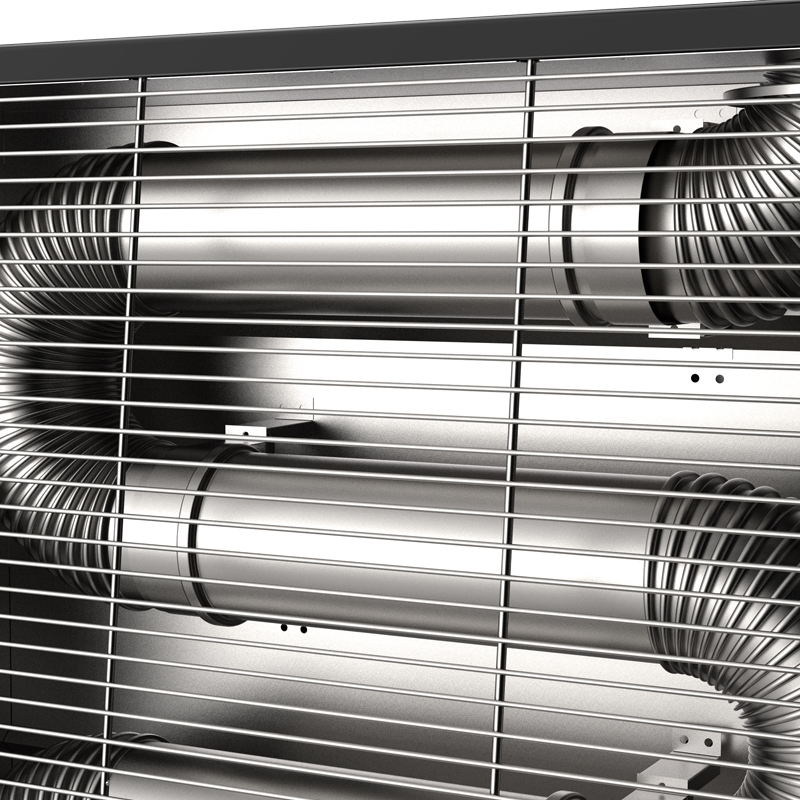
Adopts advanced combustion technology and infrared radiation system for high fuel-to-heat conversion efficiency
Sustained & stable heating, worry-free warmth supply
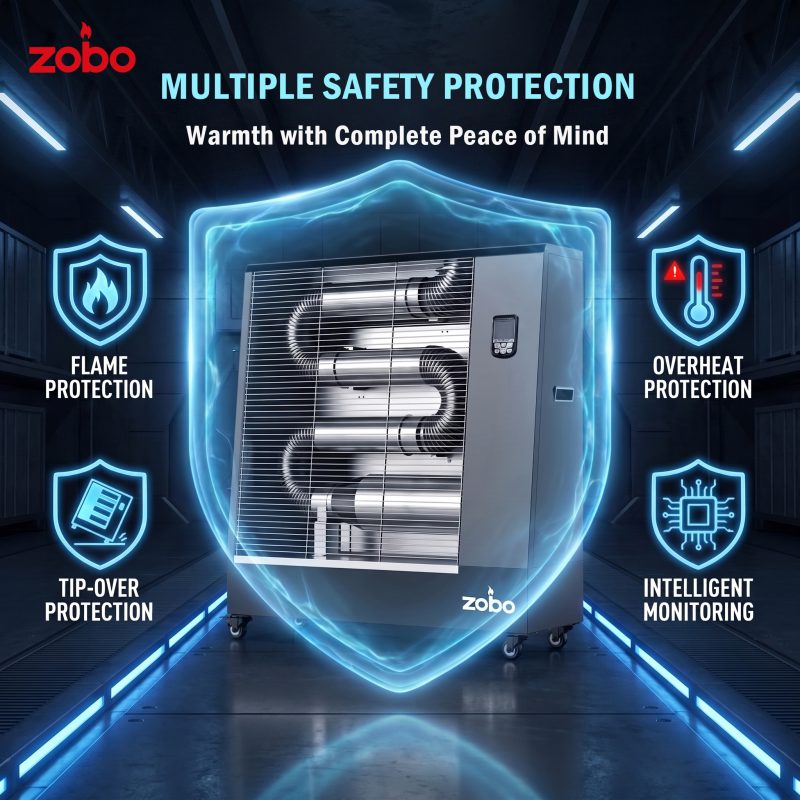
Multi-layer safety protection system, ensuring warmth with full security
LCD screen, intelligent constant temperature, warm guardian, caring protection
24-hour timer shutdown function
Uses thermal radiation to heat objects in a space instead of relying on high-volume heated airflow.
Infrared heating can be ideal for workshops, maintenance areas, warehouses, agriculture facilities, or other commercial environments where buyers need more targeted heating.
When evaluating infrared diesel heaters, pay attention to:
- Temperature-control settings
- Flame-monitoring functions
- Fuel consumption efficiency
- Timer settings
- Overall safety features and protection
Tip: Pick a supplier that specializes in industrial heaters, NOT a supplier that happens to sell diesel heaters.
- A Diverse Product Range Can Benefit Distributors and Wholesalers
While many heater distributors focus only on diesel heating equipment, some businesses sell electric heating, gas heating, and other heating technologies.
For companies developing their own heating brand or supplying heating equipment to contractors… sourcing diesel heaters from a factory that also makes alternative heating products has its benefits.
Depending on the market you serve, complementary heating equipment categories can include:
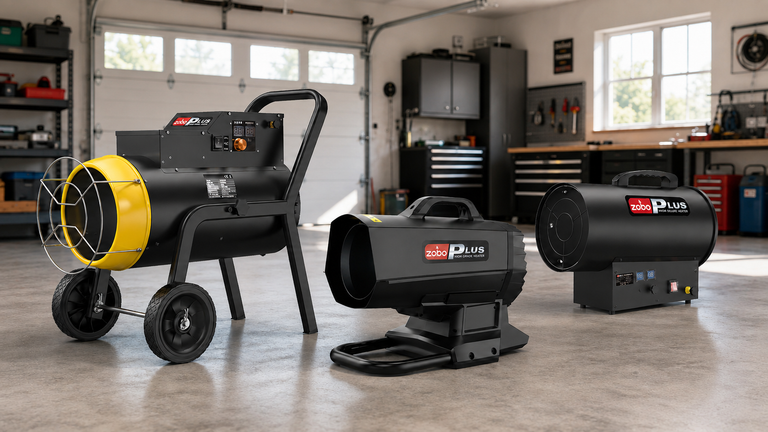
Electric Fan Heater
Traditional electric heaters with a built-in fan.
In regions with reliable electrical access, electric heating can be used as a substitute for combustion-powered heaters. Industrial electric heaters may come in multiple voltage and power configurations.
Electric Infrared Radiation Heater
Electric heaters that heat spaces using radiation.
While electric infrared heaters may not provide the same heating capacity as direct-fired diesel heaters, they can be used for spot heating applications. Electric infrared heating can supplement diesel heating equipment in some industrial settings.
Gas Air Heater
Combustion heaters that run on liquefied petroleum gas (LPG) or natural gas.
Natural gas and LPG heaters can be good alternatives for customers without easy access to diesel fuel.
Gas Forced Air Heater
Gas-powered heaters with built-in fans for blowing heated air into the surrounding space.
Gas heaters are commonly used in workshops, agricultural buildings, construction projects, and other industrial or outdoor areas with ventilation.
Outdoor Propane Heater
Heavy-duty outdoor heating equipment.
Intended for commercial use in outdoor environments or rooms with ventilation.
Tank Top Propane Heater
Compact propane heater installs directly on top of a propane gas cylinder.
Tank top propane heaters can be popular with outdoor vendors, construction companies, agricultural suppliers, and other businesses that sell temporary heating solutions.
Pros:
Working with a supplier who offers multiple heating technologies can make it easier to source heaters under a single supplier. Some importers even consolidate multiple heating types into the same shipment to reduce container shipping costs.
Cons:
Manufacturers with dozens of product categories are not always better than specialized factories. Just because a supplier sells everything… does not necessarily mean they have the best diesel heaters.
- Compare Heater Models Based on Different kW & BTU Ranges
The ideal heater for your warehouse will most likely not be the same model you select for a greenhouse installation.
Expect professional diesel heater suppliers to have a range of models that fit different heating requirements.
Heaters can be classified by:
- kW
- BTU/h
- Recommended heating volume
- Recommended heating area
Even if you already know the size of space you intend to heat, avoid choosing a heater model based only on square meters or heating capacities shown in product photos.
Heating requirements will vary based on several factors such as building volume, ceiling height, outdoor temperature, desired indoor temperature, insulation, air leakage, heater placement, door-opening frequency, and more.
Heating a sealed workshop is very different from heating an outdoor patio or uninsulated greenhouse.
Knowledgeable diesel heater manufacturers can help guide you to appropriate models based on your application details. Having multiple kW and BTU ranges also makes it easier to supply different market segments as a heater distributor or supplier.
- Quality Control is More Important Than Inspecting the Sample Unit
You’ve already inspected the heater sample. Everything works correctly. Great! Now you can order hundreds of these, right?
Unless the factory has robust quality-control standards, your bulk order could contain just as many defects as the last supplier you tried.
Ask the diesel heater factory what QC tests they perform during production and what kind of records they keep.
Incoming Material Inspection
Quality control should start before the diesel heaters are even assembled.
Incoming inspection can help ensure defective parts don’t reach the assembly line.
For long-term orders or orders in which consistency is vital (i.e. every heater needs to perform the same way), it’s important that suppliers don’t frequently change component brands or specifications without consulting you first.
Ignition and Operating Tests
If a diesel heater can’t turn on when required, it’s useless.
Ask the supplier if diesel heaters go through testing during or after production.
What gets tested?
Startup
Ignition
Fuel delivery
Flame stability
Fan blowing
Shutdown & restart conditions
Keeping detailed QC records proves that the supplier can (and does) control quality during mass production. Asking “do you test every product?” is far less effective than asking:
“What steps do you take to ensure every product meets your quality standards?”
- Flame Monitoring and Safety Protection Features
Where combustion fuel is involved, safety should be a top priority.
Ask what kind of safety protections are built into the diesel heater.
Sample questions include:
Flame Monitoring
Many diesel heaters have integrated flame-monitoring systems. This feature allows the control board to detect if combustion is occurring normally and trigger specific actions if abnormal flame conditions are detected.
Overheat Protection
If the heater’s internal temperature exceeds a certain threshold, what happens to the diesel heater?
Other common safety protections may include:
Temperature sensors
Thermostat safety settings
Electrical protection
Controlled shutdown features
Fuel pump protection
Do not hesitate to ask for specific safety documentation on the exact heater model you plan to order.
Avoid accepting generic responses like: “our diesel heaters have full safety protections”
Instead, ask the supplier to list the specific safety functions included.
- Final Inspection Before Packaging
Should the factory find problems during the pre-packaging inspection, can they resolve them or do they just overwrite request to meet shipping deadlines?
Final inspection should include:
- Product appearance
- Function checks
- Label accuracy
- Correct product specifications
- Includes all promised accessories
- Instruction manual is included
- Package condition
- Order quantity
- Custom branding was applied correctly
This becomes even more important when placing OEM orders.
What good is a heater that turns on just fine, but uses the incorrect voltage label, power plug, carton color, instruction manual, barcode, or branding based on your region?
Packaging mistakes are considered part of “product quality” for international distributors.
- Certification: Learn What You’re Buying, Not Just What They’re Selling
Product certifications are important, but do not let flashy badges on a factory’s website make you assume they “have certifications.”
Learn what certifications are actually included with the product you intend to order.
Depending on your destination country, electrical configuration, and diesel heater model… you may encounter any combination of:
- CE
- ETL
- CSA
- CB
- SAA
- ERP
…and many others.
When discussing certification with suppliers, don’t just take their word for it. Ask to see certificates that specifically mention:
Product model
Certificate holder name
Manufacturer name
Complete product description (matches actual product)
Power specifications
Proof of validity/current status (if applicable)
Market requirements change constantly. And not every certification will apply to every heater model, or every country.
Since Europe, America, and Australia follow different electrical and product compliance standards… talk to suppliers about how your intended destination market affects product certification, not just “do they have the certificates we need?”
As an importer, you should already know what certifications are required before reaching out to suppliers.
- OEM / ODM Capability
If you’re planning on developing your own brand or selling heaters under a wholesaler/reseller brand, OEM capabilities are just as important as the product itself.
Professional diesel heater suppliers should be able to offer customization options for:
Custom branding
Logo
Can your brand logo be applied to:
Heater housing
Rating labels
Control panel
Packaging cartons
Installation/manuals?
Packaging
Branded packaging can make it easier for distributors to establish a cohesive reseller brand.
Does the supplier provide customized manuals that meet your language requirements and market?
Electrical Configuration
Power specifications, plug types, and cable configuration can vary from country to country.
Double-check:
Voltage
Electric Frequency
Plug type
Power cable specifications
Don’t assume every electrical configuration is available for each diesel heater just because they look identical.
Product Configuration
Additional configuration requests can include:
Control panels
Thermostat options
Fuel tank size
Types of sensors/devices included
Does it come with mounting/stabilization legs?
Other desired functions
Remember: customized products require you to approve a branded sample unit before mass production starts.
Be sure to confirm sample order quantities, who pays for samples, expected customization time, development costs (if any), minimum order quantities, and testing requirements.
- MOQ and Sample Order Requirements
Every factory has its own MOQs. Know their purchasing terms before selecting a supplier.
Some key questions involve:
Sample order quantities. Can I order samples with my logo on them? Will the sample units use the same configuration/settings as my production order?
Late orders are just as damaging as never receiving a shipment. Know the factory’s estimated production lead times.
Standard orders
Customized orders
Orders placed closer to peak-season
For businesses that sell diesel heaters, being without stock during peak-demand seasons can be disastrous.
If your factory can’t guarantee they will meet shipping deadlines during peak season… find a factory that can.
- Container Loading and Export Experience
Bulk diesel heater buying isn’t just about manufacturing products.
Will the supplier understand how to pack a container for export?
Ask about packaging dimensions, number of units per carton, recommended units per pallet, estimated container loading capacity, photo examples of previous shipments, shipping mark examples, and available export packing methods.
Efficient container packing can lower your cost-per-heater when shipping.
For large-volume orders, even 1cm of difference in carton size can affect how many units you can fit into 1 shipping container.
Factories with previous export experience should be able to provide you with this information long before the order is shipped.
- Spare Parts: Why They Matter & How to Verify Availability
Some diesel heaters require maintenance or part replacements after years of use.
Before entering business with a diesel heater supplier, inquire about their ability to provide spare parts for:
Nozzles
Ignition components
Sensors
Fuel pumps & filters
Control boards
Power switch
Motors
Fans
Temperature sensor/controls
…and other model-specific components.
Spare parts support can make or break your long-term business relationships with customers.
A good diesel heater manufacturer will supply you with spare parts even after the initial order has shipped. Treating every order as a one-time transaction is a tell-tale sign of factories that do not plan on providing after-sales support or honoring warranties.
Bonus: some suppliers will allow you to purchase commonly requested spare parts and include them with your bulk order shipments.
- Warranty and After-Sales: How Long Is It? Really?
Your diesel heaters have a warranty. But how does the warranty process actually work?
Warranty length is meaningless if you have no way of contacting the supplier when something goes wrong.
Asking these questions can help you tell if the supplier has effective after-sales service methods in place.
Does the warranty cover all components? Most heaters will likely exclude damaged bulbs or control knobs.
What happens if the customer doesn’t save proof of purchase?
How do you file a warranty claim?
What technical information is required to process a request?
Can you provide video troubleshooting for certain issues?
How long does it usually take to process an after-sales request?
When it comes to industrial heaters, sending an entire heater back to China is unrealistic.
Factory support for diagnosing problems over email or online chat and supplying correct replacement parts is much more useful than a “5-year warranty”.
If the supplier can prove they have the capabilities to help you diagnose technical problems and ensure products are working correctly in the field… you already know they’ll stand behind their warranty promises.
- Compare Total Value When Purchasing, Not Just Unit Price
Some suppliers offer low prices because their heaters contain none or minimal testing.
Other suppliers might quote higher prices due to overseas warehouse fees, professional packaging equipment, or bilingual QC staff.
Compare total value when purchasing diesel heaters. Not just unit price.
Low priced factory = high priced supplier when you have to deal with:
- Constant defects
- Inconsistent components
- Production delays
- Customer complaints
- Poor after-sales support
- Errors in certification documentation
- Customer returns
- Incorrect packaging labels
- Equipment defects caused by poor warehouse/storage practices
Low priced supplier + great service = the best kind of supplier to work with.
Instead of focusing only on FOB price, look at complete value as a combination of:
Product Quality + Manufacturing Capabilities + Compliance + Customization + On-time Delivery + After-sales support + Price
Tips for Finding a Reliable Diesel Heater Manufacturer
So you want to find a reliable diesel heater supplier in China?
Selecting the right diesel heater factory isn’t always about who offers the best price… especially if you plan on repeat ordering, placing large-volume orders, or reselling the heaters under your own brand.
Professional diesel heater manufacturers should offer stable production rates, uniform QC standards, suitable product options, market-specific certifications, customization options, reliable bulk shipment timing, and after-sales service.
Here at zobo, we focus on commercial-grade industrial heating solutions. While we offer diesel heaters, we also provide electric heating products and gas heaters for commercial, agricultural, and industrial-use applications.
If you’re looking for a long-term industrial heater supplier to support your bulk orders, we can help with more than just finding the right diesel heater model. Our services include assisting with:
Product selection
Customized branding
Packaging customization
Manual translations
Different electrical configurations
Unique product requirements
Bulk orders
Export projects
Interested in forced air diesel heaters? Need direct-fired or infrared heating options? Want to develop a full range of industrial heating products but aren’t sure where to begin?
Whether you need electric heating equipment, want help finding different industrial heater models, or are ready to send a diesel heater inquiry to manufacturers right now… prepare a list of practical requirements:
End-use application
Required heating capacity
Import destination
Volume you plan to order
Contact zobo with your specific diesel heater requirements and we’ll help you find trusted factories that meet your project’s needs.
Do you still have questions about how to find a diesel heater supplier? Drop us a message below.