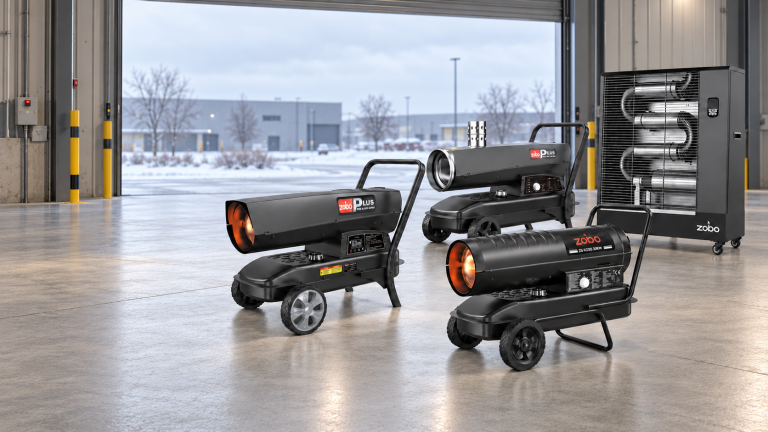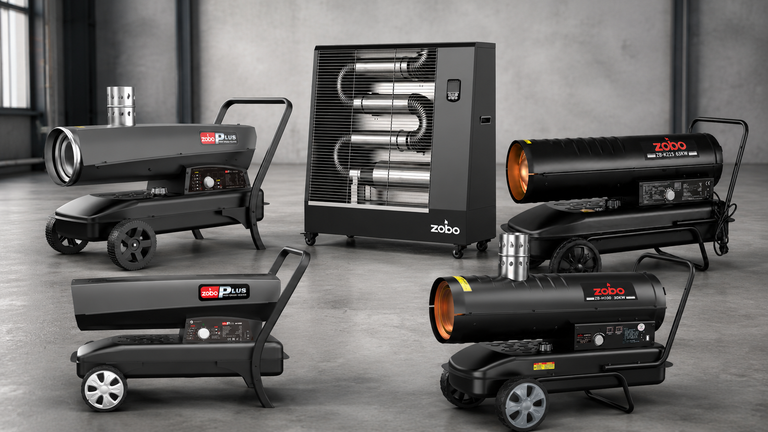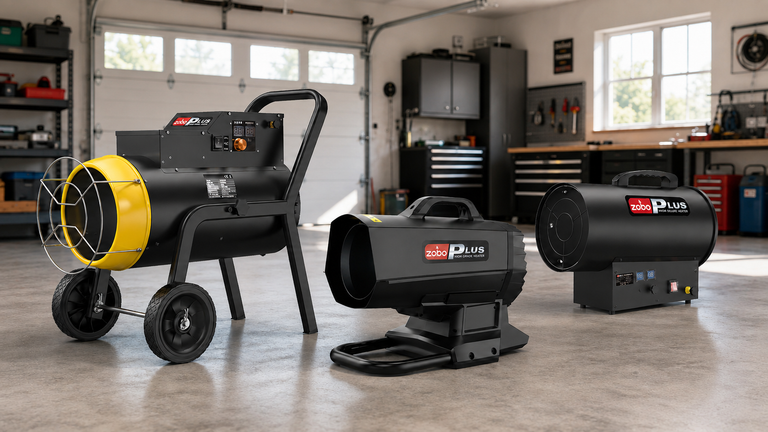

Diesel Kerosene Heater Fuel Consumption
Finding the right heating solution for a warehouse, workshop, construction site, garage, greenhouse, farm, truck, RV, boat, or temporary building depends on many factors. Heating capacity is important, but considerations like fuel consumption, operating cost, heating efficiency, safety features, maintenance needs, available fuel types, and total space to be heated all affect buying decisions.
Diesel heaters and kerosene heaters offer versatile options for anyone who needs to generate high heat output without depending entirely on a fixed electrical heating system. Both types of liquid fuel heaters can help keep industrial buildings, mobile workspaces, outdoor projects, and areas without electricity warm and comfortable all year.
Types of diesel heaters vary in fuel consumption
In recent years Chinese diesel air heaters have been manufactured with technology that allows the heater to run most efficiently no matter what power level it is on. Manufacturers like Zobo have diesel heaters that range anywhere from 10kw all the way up to 150kw. Let’s take a look at Zobo and Vevor fuel consumption charts to get an idea on how much these heaters will burn.
Zobo Diesel Air Heater Fuel Consumption
Below are the fuel consumption rates for Zobo’s diesel air heaters. As you can see Zobo makes heaters for all industrial applications that require a large amount of heat.

10 kW Diesel Heater ,0.8 L/hour Fuel Consumption
13 kW Diesel Heater ,1.03 L/hour Fuel Consumption
16 kW Diesel Heater ,1.26 L/hour Fuel Consumption
20 kW Diesel Heater ,1.8 L/hour Fuel Consumption
25 kW Diesel Heater ,1.3 L/hour Fuel Consumption
30 kW Diesel Heater, 2.9 L/hour Fuel Consumption
37 kW Diesel Heater ,3.8 L/hour Fuel Consumption
51 kW Diesel Heater , 4.8 L/hour Fuel Consumption
63 kW Diesel Heater ,5.8 L/hour Fuel Consumption
70 kW Diesel Heater ,6.9 L/hour Fuel Consumption
100 kW Diesel Heater ,9.8 L/hour Fuel Consumption
150 kW Diesel Heater ,13.5 L/hour Fuel Consumption
Vevor Parking Diesel Heater Fuel Consumption
Vevor takes on more of the parking heater market and makes some great options when looking into a lower power diesel heater or if you aren’t sure if you want to buy diesel heaters or kerosene heaters. I recommend checking out both because they are both great but serve different purposes.
Vevor makes two styles of parking heaters. A standard style heater and a vertical style heater. Below are the fuel consumption rates on the latest models of Vevor’s parking diesel heaters.
2 kW Parking Diesel Heater,0.12-0.26 L/hour Fuel Consumption
5 kW Parking Diesel Heater ,0.16- 0.52 L/hour Fuel Consumption
8 kW Parking Diesel Heater ,0.18- 0.37 L/hour Fuel Consumption
The problem is that most buyers wonder: “How many liters of diesel or kerosene does a heater use per hour?”
How much fuel is consumed by a diesel heater depends on many variables, including heater power, combustion efficiency, thermostat settings, outside temperature, building insulation, fuel quality, and other operating conditions. As a rough estimate, a diesel heater with higher rated heating power will always consume more fuel than a unit with lower power. But that does not mean a small heater is always the lowest-cost choice.
In fact, a 30 kW diesel heater that runs at the proper cycle may heat a space more efficiently than a constantly running undersized 10 kW diesel heater. Learn why understanding diesel heater fuel consumption is essential before buying an industrial diesel heater, diesel space heater, portable diesel heater, or kerosene heater.
How Does a Diesel Heater Work?
Diesel air heaters work through a controlled combustion process. Diesel fuel stored in the tank moves through a fuel pump to the burner. There it mixes with air and atomization; turns into small droplets; then ignited. Finally, a fan moves air across the combustion chamber, sending warm air out into the space.
In direct-vented heaters, combustion gases exit through the heater and into a ventilated workspace. Indirect-fired heaters separate combustion gases from the heated air through a heat exchanger. An indirect heater is typically used in spaces that require completely clean heated air, while direct-fired heaters can be placed in ventilated industrial areas and construction zones.
The main factors that affect diesel heater efficiency are:
- Fuel pump calibration
- Burner quality
- Combustion chamber design
- Air-to-fuel ratio
- Fan efficiency
- Control system
- Thermostat precision
- Heat exchanger design
- Fuel quality
- Maintenance level
Today’s diesel heaters use electronic ignition controllers and precise fuel pumps to modulate combustion levels. Many models have automatic sensors that reduce fuel supply once the thermostat reaches the desired temperature. Thermostatically controlled diesel heaters use less fuel because they can shut off or run at a lower heating stage.
Fuel Consumption of Diesel Heaters by Power Output
Fuel consumption increases with diesel heater capacity
Small diesel parking heaters made for trucks, recreational vehicles (RV), vans, boats, or travel trailers usually have a capacity between 2 kW and 8 kW. Fuel consumption varies but is roughly between 0.12 L/h to 0.60 L/h. The exact rate depends on model power settings and combustion system design.
Diesel heaters in the moderate range of 10 kW up to about 30 kW are common for smaller workshops, home garages, greenhouses, outdoor tents, small warehouses, construction trailers, or agricultural buildings. They may require about 1 L/h or less of diesel up to around 3 L/h.
Large industrial diesel heaters range anywhere from 37 kW to 150 kW or more. This includes warehouse heating units, aircraft hangars, farm heaters, agricultural drying projects, heating commercial buildings, and manufacturing facilities. These heaters may use several liters of diesel fuel every hour.
Fuel Consumption Chart
Keep in mind that these are generalized ranges used to provide a basic example. Fuel consumption will vary by model, thermostat settings, heater condition, heater altitude, ambient temperature, fuel type, and manufacturer testing methods. Buyer should verify the actual specifications of the diesel heater they are purchasing.
What Influences Diesel Heater Fuel Consumption?
Heater Maintenance
Do not neglect your heater maintenance. A dirty diesel heater will use more fuel and produce less heat. Carbon build up on the burner head, clogged air vents, dirty air filters, worn ignition cables, and inaccurate fuel pumps can decrease combustion efficiency.
Regular maintenance ensures your heater is always working at peak performance. It also reduces harmful emissions and prolongs the usable life of your heater.
Diesel Heater Vs Kerosene Heater
Diesel space heaters and kerosene heaters operate on similar principles, but there are key differences.
Diesel fuel is plentiful for industries, agriculture, transportation companies, and construction companies. If your company uses diesel for trucks, generators, farm equipment, or machinery, it makes sense to use a heater fuel that you likely already have on-site.
Kerosene fuel will generally be less viscous and burn cleaner when used in the proper equipment. Kerosene can be beneficial during cold temperatures and spaces that require less odor or clean burning applications.
Deciding on fuel type should be based on:
1.Diesel costs compared to kerosene costs
2.Availability of both fuel types
3.Fuel approvals from heater manufacturer
4.Ambient outside temperatures
5.Storage conditions
6.Maintenance concerns
7.Exhaust requirements
8.Manufacturer recommendations
Not all diesel heaters are designed to burn kerosene, and not all kerosene heaters can burn diesel. It is extremely important to confirm that the fuel type you intend to use is approved by the manufacturer.
Using the wrong fuel can lead to hard starting, thick smoke, carbon buildup, part failures, or even voided warranties.
Industrial Diesel Heater vs. Parking Diesel Heater
When choosing between industrial vs. diesel space heaters for parking applications, know that they are designed for very different purposes.
Commercial Industrial Forced Diesel Kerosene Air Heaters
Industrial diesel heaters range anywhere from 10 kW to 150 kW+. Most commercial heaters are designed to heat large spaces and push out substantial amounts of air volume.
Some common uses include:
-Factories
-Warehouses
-Construction sites
-Workshops
-Hangars
-Farm buildings
-Livestock shelters
-Crop greenhouses
-Farm equipment enclosures
-Covered construction areas
-Covered storage spaces
These types of heaters focus on higher heat output and moving larger amounts of air. They typically include wheels or lifting attachments, external fuel tanks, thermostat controls, digital displays, protective shields, overheat sensors, and automatic shut-off features.
Truck, RV, Van Diesel Parking Heaters
Parking heaters range anywhere from 2 kW to 8 kW. These heaters are meant to heat smaller spaces without having to leave your truck engine running.
These units are commonly used for:
-Trucks
-Vans
-RVs
-Travel trailers
-Boats
-Vehicle workshops
-Construction trailers
-Small storage sheds or rooms
Since these diesel heaters are heating such a small confined area, fuel consumption is fairly low. Thermostatically controlled heaters can even adjust the amount of fuel being supplied to the combustion chamber.
For diesel truck buyers, electricity usage is also a concern. Since your heater is pulling from your vehicle batteries, fuel pump, glow plug, controller, and fan are all drawing power from the same place.
Zobo Heater vs. Vevor Heater
Zobo heaters and Vevor heaters are really two different categories of diesel space heaters.
Zobo-style heaters typically refer to commercial-grade or industrial heaters. These heaters usually focus on medium to high-wattage capacities. Ideal for warehouses, commercial buildings, farms, workshops, large work spaces, and commercial heating projects.
Vevor-style heaters are mostly directed towards truck, RV, van, and boat heaters. Perfect for temporary enclosures or smaller areas that need to be heated. The advantages of this category are the low physical dimensions, less fuel consumption, portable design, and easy installation.
Directly comparing the two is like comparing apples and oranges. A small 5 kW truck heater from Vevor will always consume less diesel than a 50 kW Zobo industrial heater. However, the Vevor heater would never produce enough heat to keep a commercial warehouse warm.
When deciding between the two, buyers should look at:
- Heat output rating
- CFM air output
- Fuel consumption ranges
- Fuel tank sizes
- Voltage requirements
- Available controls
- Noise level
- Physical installation requirements
- Built-in safety features
- Heat exhaust configuration
- Recommended heating capacities
- Availability of spare parts
- Warranty length and technical support
The most efficient heater is not always the smallest wattage heater nor is it always the largest industrial heater. The most efficient heater for your application is the unit that can meet your heating requirements without being oversized or operating continuously at full power.
How Do You Calculate Diesel Heater Operating Costs?
Operating costs are simple to calculate using the following formula.
(Fuel consumed per hour) x (Fuel cost per liter) = Hourly operating costs
Example: If your heater uses 2.9 L/h and diesel fuel is $1.20 per liter, it would cost to operate as follows.
2.9 x $1.20 = $3.48 per hour to operate
Repeat this equation based on your runtime:
$3.48 per hour x 8 hours = $27.84 per day
$27.84 per day x 25 days = $696 per month
Keep in mind this would be if the heater remained at the rated fuel consumption level the entire time. If your heater has a thermostat, it will likely reduce its heating level after reaching the desired temperature. Calculate closer to real-world conditions by estimating:
✔Average hours of runtime per day
✔Percentage of the time the heater runs at full power
✔Local fuel price fluctuations
✔Seasonal temperature variances
✔Heat loss through your building
✔Additional maintenance costs
✔Electrical draw from using heaters with fans, pumps, and digital controls.
How Do You Lower Diesel Kerosene Heater Fuel Consumption?
Size your heater correctly for the space you intend to heat. Calculate your heating requirements based on the entire volume of the room, not just the square footage. Height matters as does insulation, outside ventilation, and how much the temperature needs to increase.
Add extra insulation where possible. Seal openings that do not need to be open, add roof insulation, or even use temporary walls to separate heated and unheated areas. It is often cheaper to only heat the work area rather than the entire building.
Always use your thermostat. A thermostat will help eliminate your heater from running at full power all the time. Set the temperature to what you feel is comfortable and let the heater do its job.
Clear Airflow, Blocking air inlets or outlets can cause poor airflow and overheating. Make sure there is plenty of space around your heater and avoid blowing hot air directly on walls or other flammable materials.
Perform maintenance checks. Clean the combustion chamber, check burner quality, change dirty filters, examine fuel lines, and follow the service schedule recommended by your manufacturer.
Use good quality fuel and store it properly. Keep your fuel in a sealed fuel tank that does not allow for water, debris, rust, and other particles to enter the fuel pump.
Limit heat loss. Close doors that don’t need to be open, utilize strip curtains, lower ventilation to the necessary levels, and avoid heating vacant areas of a building.
Avoid too many cold starts. It may seem counter-intuitive but allowing your heater to warm up a completely cold area may cause it to use more fuel. The key is to find a good balance that works for the specific building and work conditions.
Choosing A Diesel Heater
Before making your decision on a diesel heater or kerosene heater, gather the following information.
- Length, width, and ceiling height of workspace.
- Ideal temperature desired indoors.
- What is the coldest temperature you expect outdoors?
- How well insulated is the area you are heating?
- How much outside ventilation is needed?
- How many doors? How large are they?
- What fuel is available to me?
- How many hours per day will I need to use the heater?
- What type of electrical supply is available?
- Do I need direct or indirect fired heater?
Once you have this information, you can provide this to your supplier or manufacturer. They can help you select the right size heater for your needs.
A compact truck bed heater can be anywhere from 2 – 5 kW. Large truck beds, some campers, RVs, or oversized work spaces may require 5 – 8 kW.
Small workshops and garage spaces can operate on 10 – 20 kW heaters. Larger warehouse spaces, greenhouses, and outdoor construction areas may need 20 – 70 kW to heat efficiently.
Due to their size, commercial and industrial spaces may require multiple heaters or very large heaters ranging from 100 kW – 150 kW.
It’s not uncommon to use multiple smaller heaters to heat a single large building. This allows for better heat distribution when heating long buildings or divided work areas.
Can a diesel heater fill an entire building?
That depends on how well it’s insulated! Large commercial diesel air heaters can keep big buildings warm with the proper insulation, thermostat use, and maintenance.
Do Diesel Heaters Require Electricity?
Yes. Unless it’s a manual, kick-start diesel heater (we don’t recommend these). Diesel heaters require electrical currents to run the fan, fuel pump, glow plug, and digital controllers.
Can I Leave My Diesel Heater On Overnight?
Yes, but you shouldn’t have to if your heater has a thermostat. Cycling your diesel heater off and on will extend the life of your heater.
Why is my diesel heater using so much diesel?
This could be caused by many different things. Below are some of the most common reasons.
Extremely low outdoor temperatures.
Poor or no insulation.
Frequently opening doors.
Thermostat set too high.
Dirty air filters, fuel lines, or burner heads.
Low-quality fuel or water in fuel.
Incorrect heater sizing.
Direct ventilation of heater into outdoors.Can I Use My Diesel Heater in an Enclosed Space?
This will depend on if your heater is direct-fired or indirect-fired. Direct-fired heaters require proper ventilation. These units have their heat exiting the same chamber that diesel is being combusted in.
Indirect-fired heaters, or some parking heaters have a heat exchanger. This allows for complete separation of outgoing exhaust fumes and heated air.
Will a higher-wattage diesel heater heat my space faster?
Not necessarily. The higher the wattage, the more fuel it will consume. Just because a heater has a high-wattage doesn’t mean it’s more efficient.
Does using kerosene vs diesel make a heater more efficient?
Yes and no. Kerosene is thinner than diesel which can allow for easier combustion. However, if your heater is designed to use diesel fuel, using kerosene can damage the heater.
My diesel heater isn’t putting out enough heat. What can I do?
Make sure your heater is the proper size for the area you wish to heat. A small 10 kW heater will not keep a 1,000 square foot warehouse warm enough. Try to find a balance that works for you.
- Heater Power Rating
Power rating is a major factor. Expect a 100 kW industrial heater to use more fuel than a 5 kW diesel heater for your truck because it simply produces more heat. However, opting for the largest heater is not always the best choice.
Running an oversized heater can cause rapid temperature fluctuations and frequent heating cycles. Smaller heaters may run continuously, causing them to operate at near maximum power more often.
The ideal method of selecting a heater is based on space volume, desired temperature change, ventilation practices, building insulation, and outdoor climate. - Outdoor Ambient Temperature
For example, a diesel heater will consume less fuel at an outdoor temperature of 5° C than it would at −20° C. When heaters run in colder temperatures, they may remain on longer and at a higher power setting to compensate for lower ambient temperatures.
Pay attention to fuel specifications at lower temperatures. Diesel thickens at cold temperatures which could affect combustion. A diesel heater operating in cold environments may require winter diesel or another manufacturer approved fuel type. - Insulation Value
The better your insulation is, the less fuel you will use. Heat loss can occur through exposed walls, open doors, damaged ceilings, thin metal buildings, window areas, and other ventilation sources.
Good insulation will allow a space to hold heat longer and gives your thermostat time to kick the heater back down to a lower setting. A poorly insulated building will make your diesel heater work harder to maintain its temperature.
Insulation upgrades can drastically reduce the operating costs of large industrial heaters. - Door Activity
An employee opening and closing the doors on a warehouse or leaving the door open for loading items is wasting fuel. Every time the door opens, warm air leaves and cold rushes inside.
The heater must work harder to replenish that lost heat by consuming more fuel. Strip curtains, temporary partitions, air curtains, and better operational practices can reduce door-related heat losses. - Thermostat Setting
The higher you set your thermostat, the more diesel fuel will be consumed. If you only need to heat your workshop to 18° C instead of 24° C, you can reduce your heating requirements without sacrificing comfort.
For truck cabs and indoor living spaces, maintaining a relatively consistent moderate temperature can be more efficient than cycling a diesel heater between high power and off. - Fuel Type and Quality
Clean diesel that meets manufacturer specifications will support complete combustion. Water in your fuel, incorrect fuel viscosity, dirty fuel, or improperly stored fuel can lead to hard starting, smoke, carbon debris, decreased heat production, and higher diesel consumption.
Store your fuel in a clean environment and keep water and moisture away from your fuel tank. Change filters regularly if you are working in dusty conditions or suspect your fuel has been compromised. - Heater Power Rating
Power rating is a major factor. Expect a 100 kW industrial heater to use more fuel than a 5 kW diesel heater for your truck because it simply produces more heat. However, opting for the largest heater is not always the best choice.
Running an oversized heater can cause rapid temperature fluctuations and frequent heating cycles. Smaller heaters may run continuously, causing them to operate at near maximum power more often.
The ideal method of selecting a heater is based on space volume, desired temperature change, ventilation practices, building insulation, and outdoor climate. - Outdoor Ambient Temperature
For example, a diesel heater will consume less fuel at an outdoor temperature of 5° C than it would at −20° C. When heaters run in colder temperatures, they may remain on longer and at a higher power setting to compensate for lower ambient temperatures.
Pay attention to fuel specifications at lower temperatures. Diesel thickens at cold temperatures which could affect combustion. A diesel heater operating in cold environments may require winter diesel or another manufacturer approved fuel type. - Insulation Value
The better your insulation is, the less fuel you will use. Heat loss can occur through exposed walls, open doors, damaged ceilings, thin metal buildings, window areas, and other ventilation sources.
Good insulation will allow a space to hold heat longer and gives your thermostat time to kick the heater back down to a lower setting. A poorly insulated building will make your diesel heater work harder to maintain its temperature.
Insulation upgrades can drastically reduce the operating costs of large industrial heaters. - Door Activity
An employee opening and closing the doors on a warehouse or leaving the door open for loading items is wasting fuel. Every time the door opens, warm air leaves and cold rushes inside.
The heater must work harder to replenish that lost heat by consuming more fuel. Strip curtains, temporary partitions, air curtains, and better operational practices can reduce door-related heat losses. - Thermostat Setting
The higher you set your thermostat, the more diesel fuel will be consumed. If you only need to heat your workshop to 18° C instead of 24° C, you can reduce your heating requirements without sacrificing comfort.
For truck cabs and indoor living spaces, maintaining a relatively consistent moderate temperature can be more efficient than cycling a diesel heater between high power and off. - Fuel Type and Quality
Clean diesel that meets manufacturer specifications will support complete combustion. Water in your fuel, incorrect fuel viscosity, dirty fuel, or improperly stored fuel can lead to hard starting, smoke, carbon debris, decreased heat production, and higher diesel consumption.
Store your fuel in a clean environment and keep water and moisture away from your fuel tank. Change filters regularly if you are working in dusty conditions or suspect your fuel has been compromised. - Heater Maintenance
Do not neglect your heater maintenance. A dirty diesel heater will use more fuel and produce less heat. Carbon build up on the burner head, clogged air vents, dirty air filters, worn ignition cables, and inaccurate fuel pumps can decrease combustion efficiency.
Regular maintenance ensures your heater is always working at peak performance. It also reduces harmful emissions and prolongs the usable life of your heater.
Conclusion
Fuel consumption of diesel heaters depends on more than just wattage. Diesel heater designs, combustion efficiency, thermostat use, outdoor temperatures, insulation, outdoor ventilation, fuel condition, and regular maintenance can impact how much fuel you consume while heating.
Compact truck and van heaters offer low fuel consumption for commercial drivers. Portable diesel air heaters are great for smaller workshops, warehouses, and outdoor structures. Large industrial heaters give you the airflow and heating capacity required to heat larger buildings.
When deciding between diesel vs kerosene heaters, look at factors like local fuel pricing, fuel availability, fuel approved by manufacturer, and your intended use. When comparing different brands always consider the heaters intended use. You’re not comparing apple to apples.
Save fuel and money by sizing your heater correctly. Add insulation where possible. Use a thermostat. Keep the area around your heater clear, perform regular maintenance, use good fuel, and limit heat loss.
A correctly chosen energy-efficient diesel heater can offer the perfect mixture of heating capability, fuel economy, portability, and affordable operation for industrial, commercial, agricultural, construction companies, marine vessels, and mobile workspaces.